
Last updated October 15, 2026
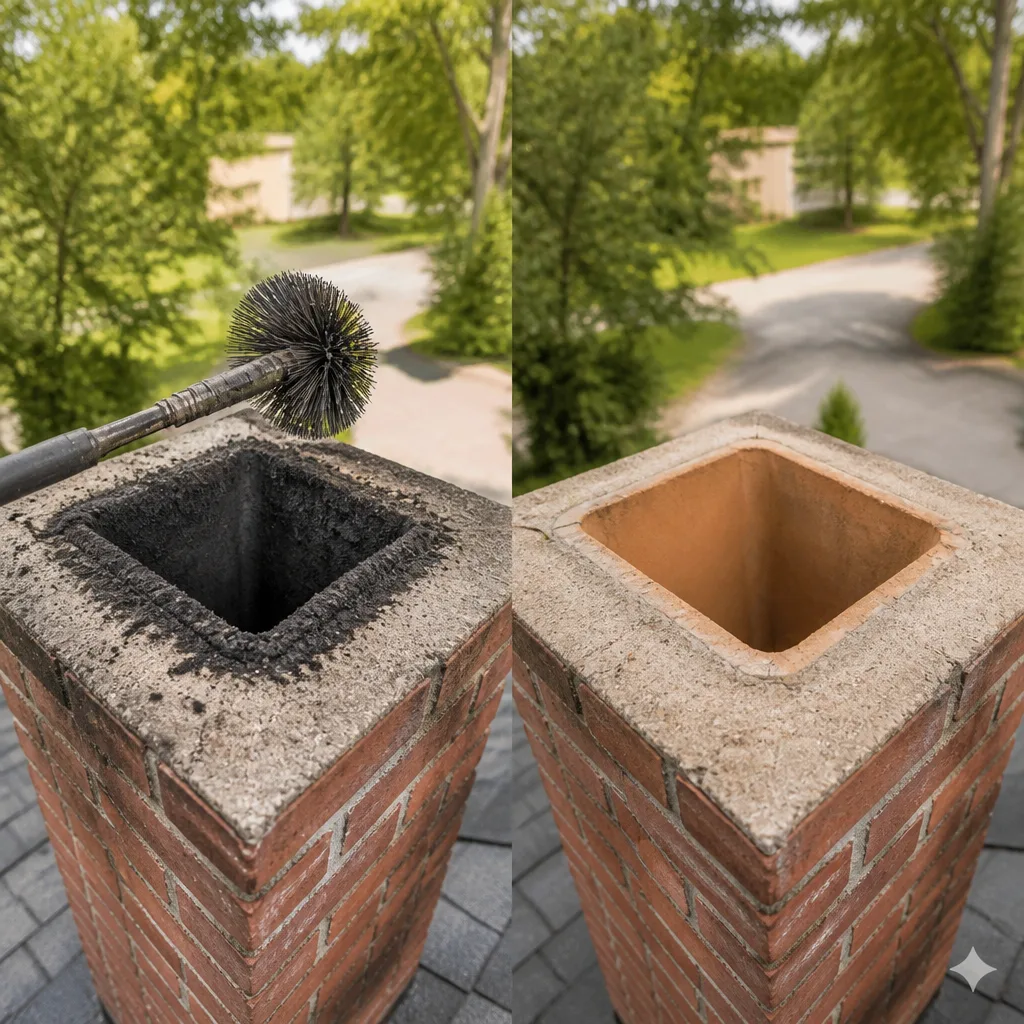 Sweep & inspection
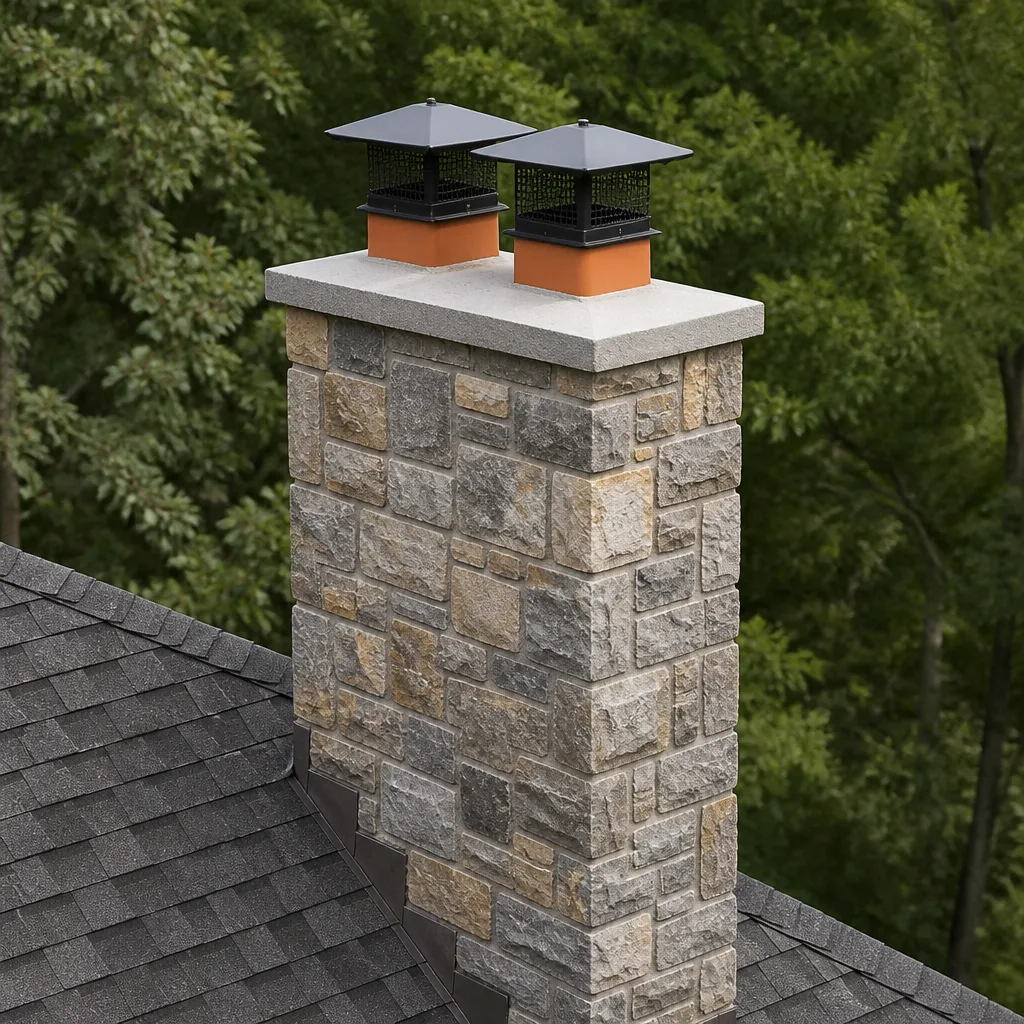 Caps & crowns
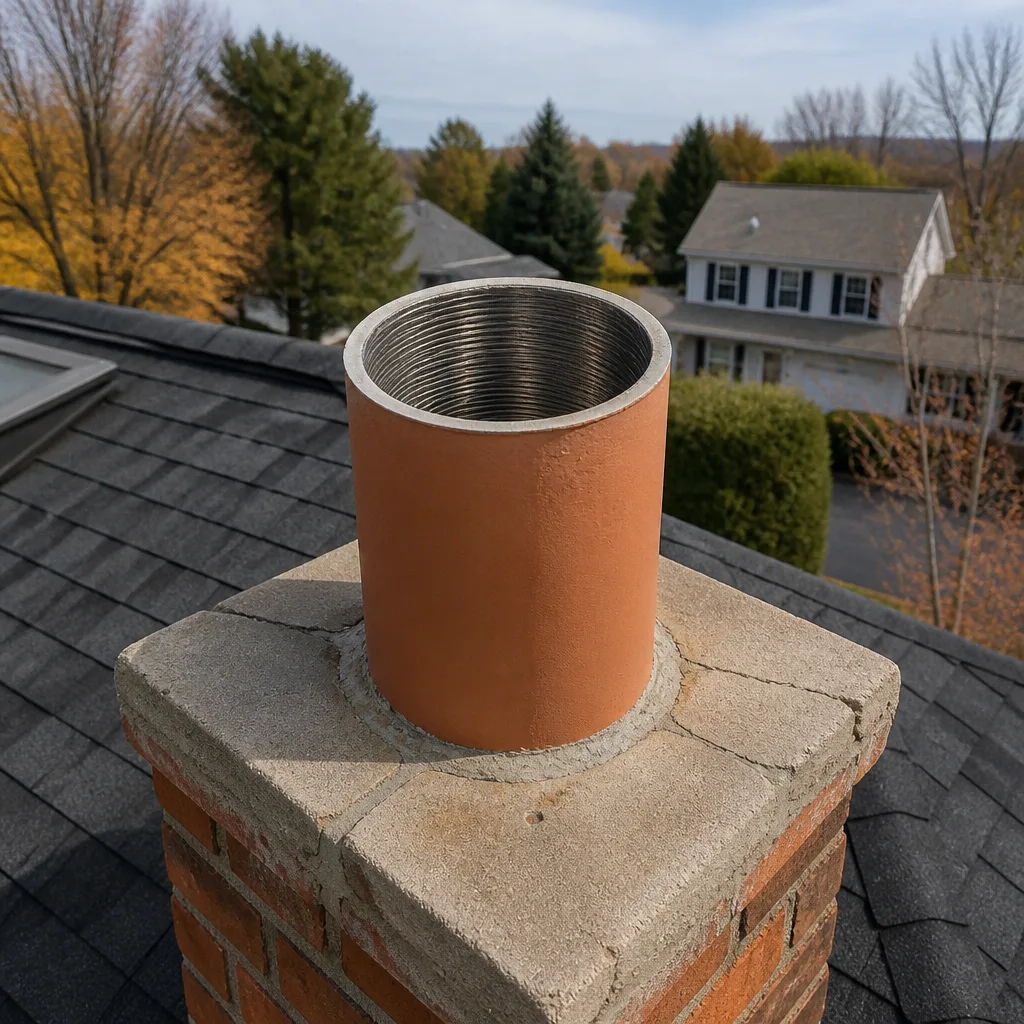 Flue relining
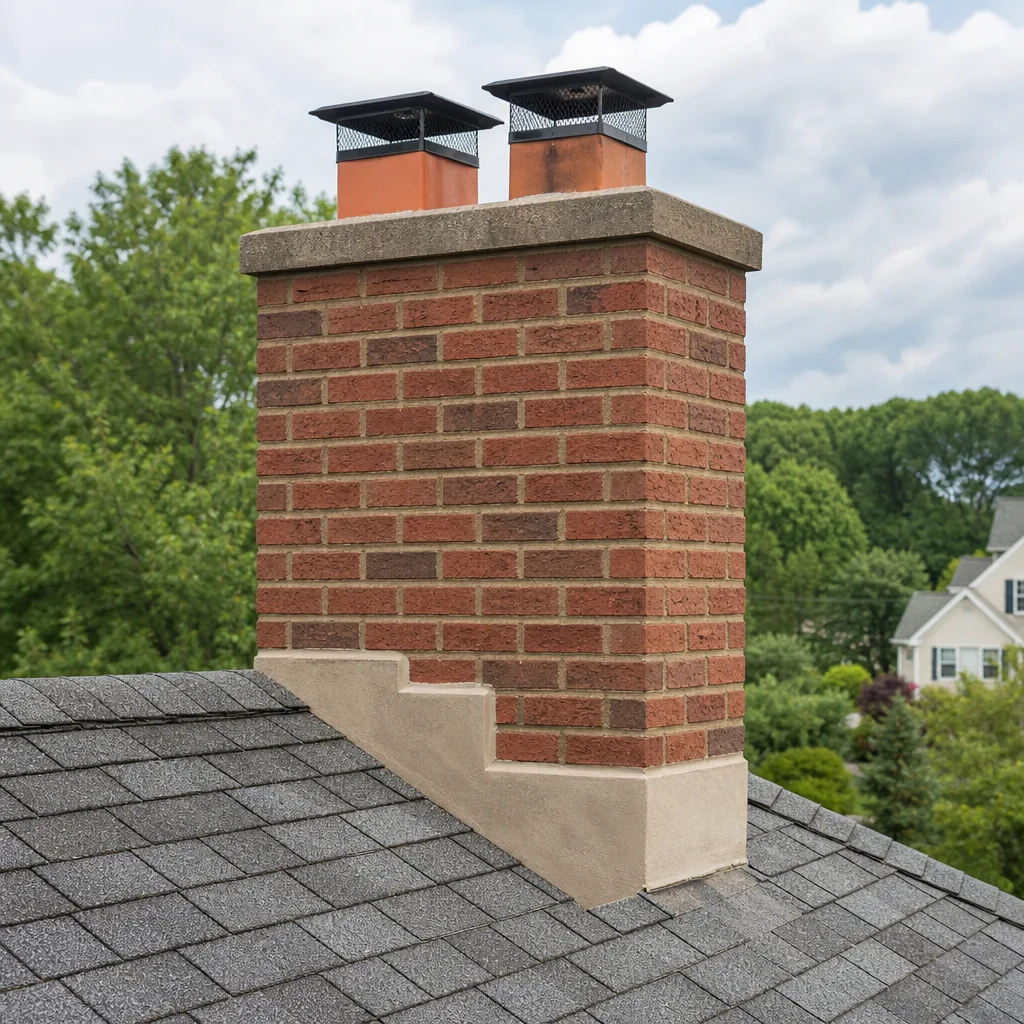 Masonry repair
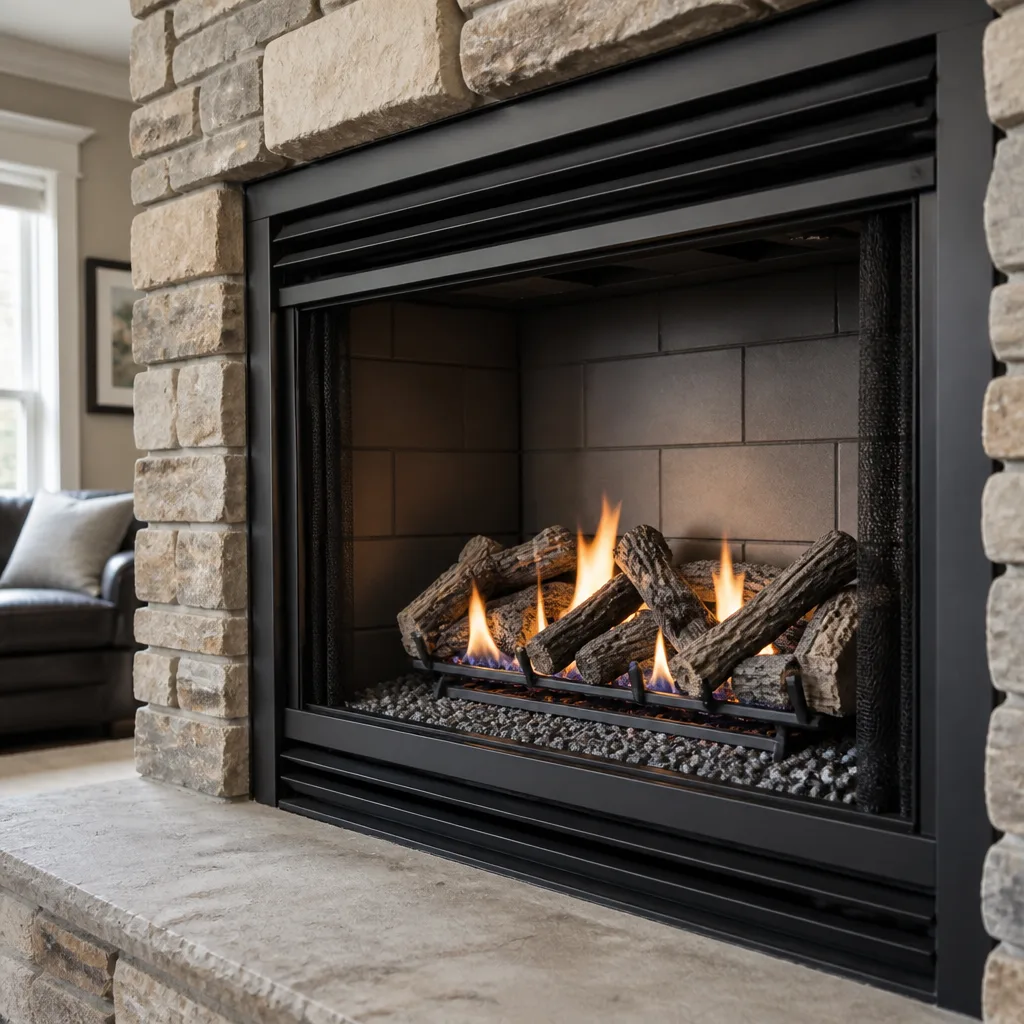 Gas fireplace service
Level 1 sweep and inspection to the NFPA 211 annual standard - flue, crown, cap, and flashing checked and photographed
Chimney sweep logs do not sweep chimneys. They loosen some creosote - which then falls where a brush and vacuum still have to collect it.
The Complete Guide to Chimney Cleaning in Dallas
Most Dallas homeowners burn fewer than 30 fires a year, yet creosote and moisture damage still close chimneys prematurely. The reason isn’t how often you burn. It’s what North Texas air does to a flue that sits idle for nine months. This guide explains why Dallas chimneys fail differently than chimneys in colder climates, what a proper cleaning actually involves, what it costs in the Dallas market, and how to read a contractor’s report so you know whether they found something or just swept and left. For seasonal chimney cleaning care for Dallas, check our year-round homeowner’s guide. If you own a fireplace in Dallas, the information here will change how you think about chimney maintenance.
Styles & brands we work with
Quick Answer
Chimney cleaning in Dallas typically costs between $159 and $279 for a standard open-flue fireplace with a single flue, and most jobs take 45 to 90 minutes. The work should include a full flue sweep, a smoke chamber cleaning, and a visual inspection of the firebox, damper, and exterior masonry. In Dallas specifically, we recommend an annual sweep regardless of how few fires you burn, because the combination of high humidity, clay soil movement, and a long idle season creates conditions where even light creosote hardens and mortar deteriorates faster than homeowners expect. Flint Chimney Co Dallas provides a written price before any work begins, and every cleaning includes a documented condition report. See our step-by-step guide on how to hire a chimney cleaning contractor in Dallas for more on what to expect.
Table of Contents
- Why Dallas Chimneys Fail Differently
- What a Chimney Cleaning Actually Includes
- How Much Does Chimney Cleaning Cost in Dallas?
- How the Dallas Climate Affects Creosote
- Clay Soil and Your Chimney: The Overlooked Connection
- What Should Be in a Written Scope of Work
- How to Read a Post-Cleaning Report
- Common Mistakes to Avoid
- When to Call a Professional
- Frequently Asked Questions
- The Bottom Line
Why Dallas Chimneys Fail Differently
Dallas sits in a climate zone that chimney guides written for the Northeast or Midwest simply don’t account for. We get maybe three months of actual burn season, often interrupted by warm spells that push the temperature into the 60s in January. A homeowner in Boston might burn 80 fires a year. A homeowner in Dallas might burn 15. That sounds like good news for the chimney, but it isn’t, and here’s the technical reason why.
When you burn a fire, the flue gets hot, and that heat drives moisture out of the masonry and the liner. A chimney that runs regularly stays dry. A Dallas chimney that fires 15 times a year stays damp for months at a stretch. North Texas humidity hovers between 50 and 70 percent most of the year, and that moisture works its way into the porous clay flue tiles and the mortar joints between them. Wet mortar expands and contracts with temperature swings, and Dallas swings are sharp: freezing nights in February followed by 60-degree afternoons. That cycling cracks mortar even without a single fire in the grate. By the time you finally light a fire in November, the flue may already have hairline fractures you can’t see from the hearth.
This is why the chimney sweep in Dallas we perform is not just about removing soot. It’s an annual opportunity to catch the moisture damage that happens while the fireplace sits unused. In our experience across Dallas, the chimneys in the worst shape are often attached to homes where the owners say, “We barely even use the fireplace.”
What a Chimney Cleaning Actually Includes
A proper chimney cleaning is a multi-step process, not a quick pass with a wire brush. Here is what any legitimate contractor should perform on a standard Dallas fireplace, whether it’s a one-story ranch in Richardson or a two-story brick traditional in Lakewood.
- Flue sweep. The technician runs a properly sized wire or poly brush down the full length of the flue, from the top of the chimney to the firebox. This removes creosote buildup, soot, and any debris like leaves, twigs, or animal nesting material.
- Smoke chamber cleaning. The smoke chamber is the funnel-shaped area above the damper and below the flue. It has ledged masonry and is a common creosote trap. Many discount sweeps skip this area because it’s awkward to reach. It shouldn’t be skipped.
- Firebox cleaning. The firebox floor and walls get scraped and vacuumed. Ash, soot, and any loose brick or mortar are removed.
- Damper inspection and operation check. The damper should open and close fully and seat properly. A warped or rusted damper wastes conditioned air all summer and can smoke out the house in winter.
- Visual inspection of accessible components. This includes the flue interior (via the top or from below), the chimney crown, the exterior mortar joints visible from the ground, and the flashing where the chimney meets the roof.
Every step should be documented in a written report. If a contractor can’t tell us what they did and what they found, they didn’t do the job, or they didn’t do it right. That’s why Flint Chimney Co Dallas puts everything in writing before and after every call. The pre-job price quote tells you exactly what’s included, and the post-job report tells you exactly what was found.
How Much Does Chimney Cleaning Cost in Dallas?
Chimney cleaning prices in Dallas vary by flue type, fireplace configuration, and the condition of the chimney. Here are the market ranges we see in the Dallas-Fort Worth metro as of 2025 and 2026.
| Service Type | Typical Price Range in Dallas | What’s Included |
|---|---|---|
| Standard sweep, open fireplace, one flue | $159 – $229 | Flue sweep, smoke chamber, firebox, damper check, visual inspection |
| Sweep with moderate creosote (Stage 2) | $219 – $279 | All standard items plus additional brushing time and chemical treatment as needed |
| Two-flue home (double-sided fireplace or second flue for furnace/water heater) | $249 – $345 | Both flues swept and inspected |
| Prefab fireplace sweep (metal flue, manufactured firebox) | $139 – $189 | Metal flue sweep and firebox inspection |
| Sweep plus Level 2 video inspection | $329 – $459 | Full sweep plus internal camera scan of the flue |
These are the prices you should expect from a licensed, insured Dallas chimney contractor. Anything significantly below $100 for a full sweep should raise questions: either the technician is cutting corners on the smoke chamber, or the company plans to make its money on repairs discovered after the low-ball price gets them in the door. We write our prices down ahead of time and the number you approve is the number you pay. No surprise invoices. That’s the chimney inspection in Dallas standard we hold, and we hold it on sweeps too.
How the Dallas Climate Affects Creosote
Creosote forms when wood smoke cools and condenses on the flue wall. Every fire produces some creosote. The question is what happens to it afterward. In cold climates, the flue stays hot during long burn seasons and creosote keeps getting pushed out with each fire. In Dallas, we get short, inconsistent burns. A family lights a fire on a cold Saturday night, enjoys it for three hours, then goes to bed. The flue temperature drops fast because the North Texas night air isn’t that cold. The creosote that condensed during the fire never gets a second hot fire to burn it off. It sits there.
Stage 1 creosote is soft, flaky, and easy to remove. Most Dallas fireplaces that get cleaned annually only ever have Stage 1. But if a chimney goes two or three years without a sweep, that Stage 1 absorbs moisture from humid North Texas air and begins to harden into Stage 2: a dense, tar-like glaze that sticks to flue tiles. Stage 2 requires mechanical scraping or chemical treatment to remove and costs more per sweep because it takes longer and wears down equipment. Stage 3 creosote is a hard, glassy crust that poses a serious fire risk and requires aggressive mechanical removal or even flue relining.
The bad news for Dallas homeowners is this: we see Stage 2 creosote in chimneys that have burned as few as 20 fires total, because the idle season lets Stage 1 cure into Stage 2. The fix is simple. Get an annual sweep regardless of how little you burn. In Dallas, that one sweep a year catches the creosote before it turns into a removal project.
Clay Soil and Your Chimney: The Overlooked Connection
Here’s something almost no national chimney guide covering Dallas will tell you. The clay soil under North Texas is expansive. When it gets wet, it swells. When it dries, it shrinks. We get long dry stretches followed by heavy spring and fall rains, and that cycling moves foundations. A house that sits on a slab will flex in ways that stress the chimney structure differently than a home in a sandy-soil market like Houston or Austin.
What does that have to do with cleaning? Two things. First, the slight foundation movement over time creates hairline cracks in the exterior mortar joints between bricks. Those cracks let moisture into the chimney structure, and that moisture speeds up the deterioration of the flue liner and the smoke chamber masonry. Second, subtle shifts can misalign the flue tiles themselves, creating ledges and offsets where creosote builds up and a standard brush can’t reach it well. That’s why a proper Dallas chimney inspection includes an exterior mortar assessment, not just an interior sweep.
If the technician sweeping your chimney never looks at your slab or your exterior brickwork, you’re only getting half the service. The chimney repair in Dallas we perform often starts as a finding tucked into a standard cleaning report: cracked mortar on the east face, or a flue tile offset that needs a camera to confirm.
What Should Be in a Written Scope of Work
Every chimney cleaning in Dallas should come with a written scope of work before the technician starts. If a company won’t put it in writing, that’s a problem. Here’s what a legitimate scope of work should include for a Dallas chimney cleaning, with specifics for our market.
- Exact services included, line by line. “Flue sweep, smoke chamber cleaning, firebox cleaning, damper inspection, visual exterior inspection” should all be spelled out. If it just says “chimney cleaning,” ask what that means.
- Total price with no open-ended language. The number should be final, not an estimate that says “additional charges may apply based on findings.” Findings should be reported and priced separately with your approval before any repair work happens.
- Flue size and type. Dallas homes span a wide range of eras, from 1920s Tudors in Munger Place to 2010s tract homes in Little Elm. Tile-lined masonry flues and metal prefab flues take different tools and different procedures. The scope should reflect what’s actually above your firebox.
- For two-story homes: roof access method and flashing check. A two-story chimney in East Dallas or North Dallas requires ladder work or roof access that a one-story home in Mesquite doesn’t. The scope should state whether flashing inspection is included and how they’ll access the top of the flue.
- What happens about creosote type found. If Stage 2 creosote is present, will the base price cover it? At Flint Chimney Co Dallas, we state ahead of time that Stage 2 buildup may add $40 to $60 in extra brushing time, and we tell you before the brush goes in, not after the work is done.
A written scope isn’t just a piece of paper. It’s the difference between a tradesperson who stands behind their work and someone who guesses at the price when the job’s already done.
How to Read a Post-Cleaning Report
A post-cleaning report tells you what the technician actually found. But not all reports carry the same weight. Here’s how to tell whether your contractor is giving you real information or just checking boxes.
- Look for creosote type and location. A real report says something like “Stage 1 creosote removed from flue, moderate buildup concentrated in smoke chamber.” A weak report says “flue cleaned.” The first one tells us what they found. The second tells us they’re not documenting anything.
- Look for condition notes on specific components. Damper is rusted but functional. Crown has minor cracking. Flashing appears sealed at the time of inspection. These are specific, measurable observations. If the report says “all good,” it’s not a report, it’s a receipt.
- Look for photographs. We recommend a video scan for any chimney that hasn’t been inspected in three or more years. A Level 2 inspection with a camera shows you the inside of the flue, and you should be given still images or a video clip. You can’t evaluate a flue from the roof alone.
- Look for a recommendation section separated from the cleaning section. The cleaning report says what was done. The recommendation section says what should be addressed and why, with priority levels. A good report might say: “Crown cracking, monitor annually, no action required this season” or “Smoke chamber mortar deterioration, recommend repair within 12 months.” That’s actionable.
If the technician hands us a one-liner, we’ve paid for a sweep but not for knowledge. The knowledge is the point. A chimney cleaning is a maintenance task, but it’s also the annual health exam for a structural system in your house.
Common Mistakes to Avoid
- Skipping the sweep because you barely burn. In Dallas, this is the most common and most expensive mistake. The chimney sits unused, moisture sets in, and by the time you notice an odor or a drafting problem, the damage has already happened. Annual is annual, whether you burn 5 fires or 50.
- Choosing the cheapest bid without asking what’s included. A $89 sweep in Dallas almost certainly skips the smoke chamber and the damper check. You’ll pay the difference later, or you’ll never know what was missed.
- Burning pine or unseasoned wood. Pine is available everywhere in Texas and it’s cheap. It also produces more creosote by volume than seasoned hardwoods like oak or pecan. If you’re burning pine in a Dallas fireplace, expect heavier buildup.
- Assuming the chimney is fine because the last sweep was “clean.” A clean flue can still have mortar deterioration, crown cracking, or flashing failure. The visual inspection matters as much as the sweep itself.
- Hiring a contractor who won’t write down the scope. If the price isn’t in writing before the work starts, you’re accepting open-ended billing. We don’t think you should ever have to guess what the final invoice will say.
- Ignoring the exterior masonry. In Dallas, clay soil shifts and brickwork cracks. The exterior of your chimney is part of the system. If a contractor only looks inside, they’re missing the most common failure point in this market.
When to Call a Professional
Chimney cleaning is not a DIY job, and we say that even though we understand the impulse. The work requires roof access or at minimum a properly sized brush and the ability to work from the top of the flue. A homeowner with a ladder and a hardware-store brush can’t clean a smoke chamber properly and has no way to inspect what they can’t see. More importantly, a chimney that has gone uncleaned for years can have creosote glaze or structural defects that a homeowner won’t recognize until it becomes a fire hazard or a smoke leak into the house.
If you haven’t had your chimney cleaned in two or more years in Dallas, call a professional. If you smell a fireplace odor when the air conditioner runs, call a professional. If you see white staining on the exterior brick, call a professional. Flint Chimney Co Dallas offers free estimates in Dallas. Call (361) 492-4099 and we’ll send a background-checked, uniformed technician who will write everything down before any work starts.
Frequently Asked Questions
A standard chimney sweep in Dallas costs $159 to $279 for a single-flue open fireplace. The price depends on creosote buildup level, flue type, and whether the home is one story or two. Call (361) 492-4099 for a written quote before any work begins.
Once a year, regardless of how few fires you burn. Dallas humidity and long idle seasons cause creosote to harden and mortar to crack even in lightly used chimneys. An annual sweep catches problems before they become repair projects.
Yes. The problem in Dallas isn’t heavy use, it’s moisture and time. A chimney that sits unused for nine months absorbs humidity, which weakens mortar and hardens any existing creosote. Light use doesn’t prevent deterioration; annual maintenance does.
A standard sweep includes a visual inspection of accessible components, including the flue, damper, firebox, and exterior masonry visible from the ground. A full video scan of the flue interior is a separate Level 2 inspection, which we recommend for homes in Dallas that haven’t been inspected in three or more years, especially given the clay-soil conditions across the metro.
Sometimes. If the smoke problem is caused by creosote buildup or a blocked flue, a sweep solves it. But smoky fireplaces in Dallas are also caused by negative air pressure in tightly sealed newer homes, by a damper that doesn’t open fully, or by a flue that’s undersized for the firebox. A proper inspection identifies which issue you have.
Creosote builds up, hardens in the humid air, and eventually becomes a dense glaze that can ignite and cause a chimney fire. Moisture seeps into mortar joints, weakening the structure over time. The smell can backdraft into the house during the summer. And when you finally do book a cleaning, the job costs more because the buildup has to be scraped off rather than brushed out. Annual cleaning is the cheapest option in the long run.
The Bottom Line
Dallas chimneys don’t fail because they’re overused. They fail because they’re underused and exposed. Short burn seasons, high humidity, and clay soil that moves under the foundation all combine to create a set of conditions that generic chimney advice misses. The practical takeaway is straightforward: get a sweep every year, even if you burned ten fires or none. Get the scope and the price in writing before the technician starts. Read the report afterward and ask questions about anything vague. A chimney cleaning is a $200 annual maintenance task that prevents a $2,000 repair or a house fire. That’s the whole argument. Flint Chimney Co Dallas operates under the Garrison Standard, with a written price before any work starts, a 365-Day Done Right Promise on every repair, and a live person answering the phone 24/7. If you’re in Dallas and haven’t had a sweep in more than a year, call (361) 492-4099 and get on the schedule.
Written by Hank Delano, Owner at Flint Chimney Co Dallas, serving Dallas since 2002.
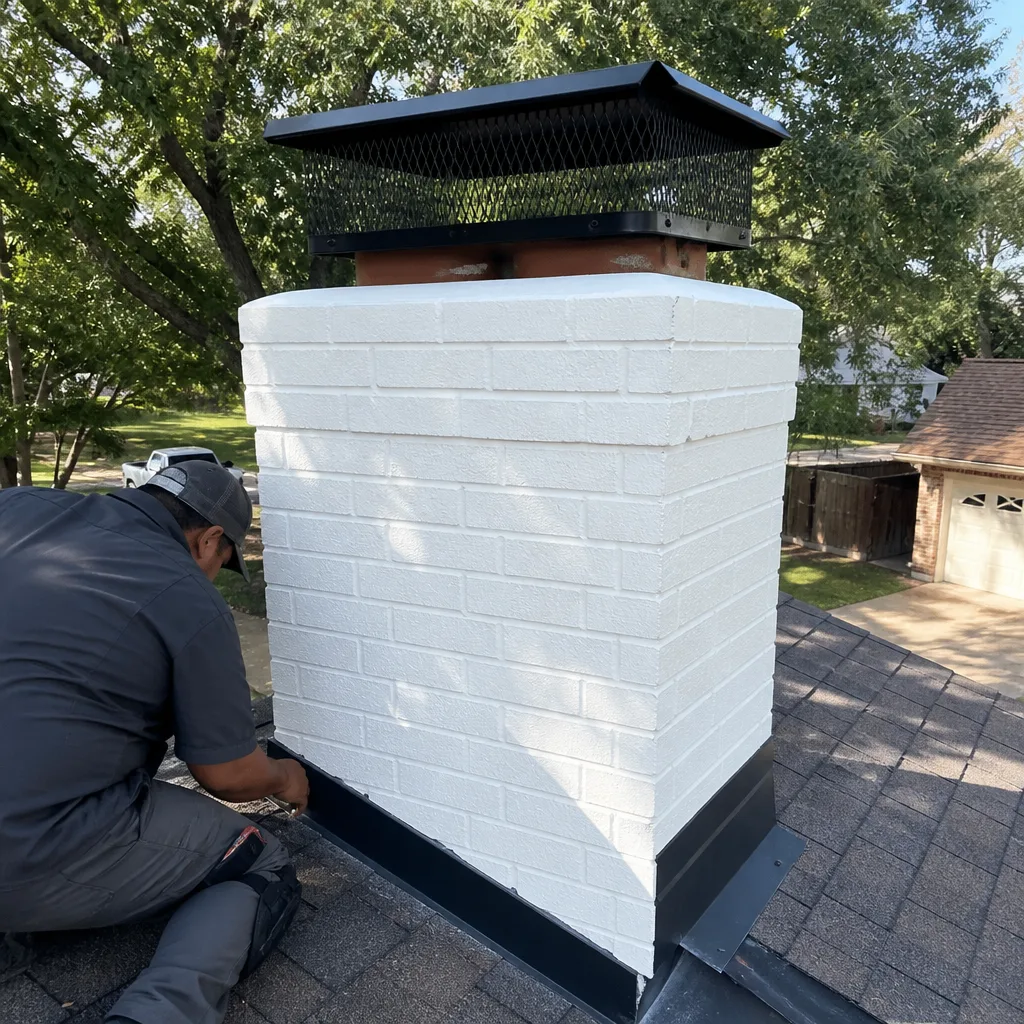
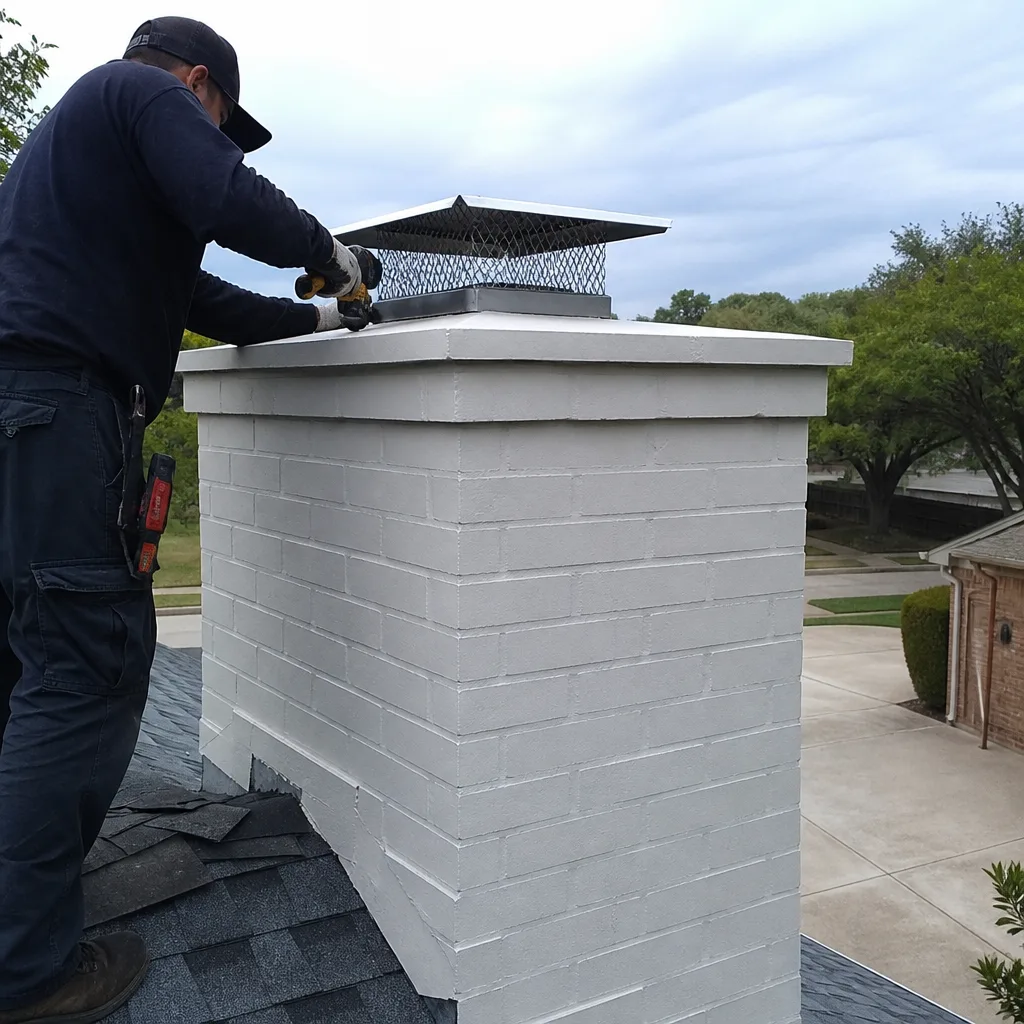
See the difference
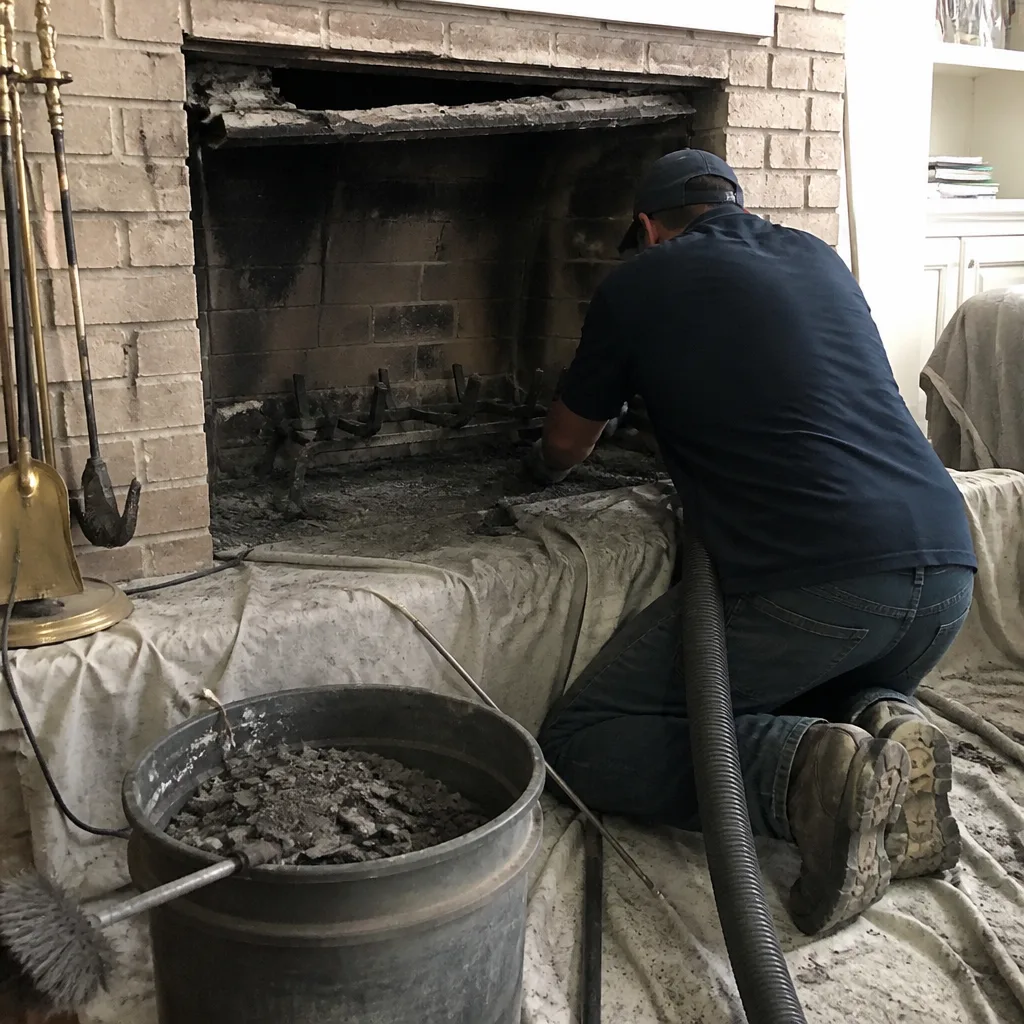 Before
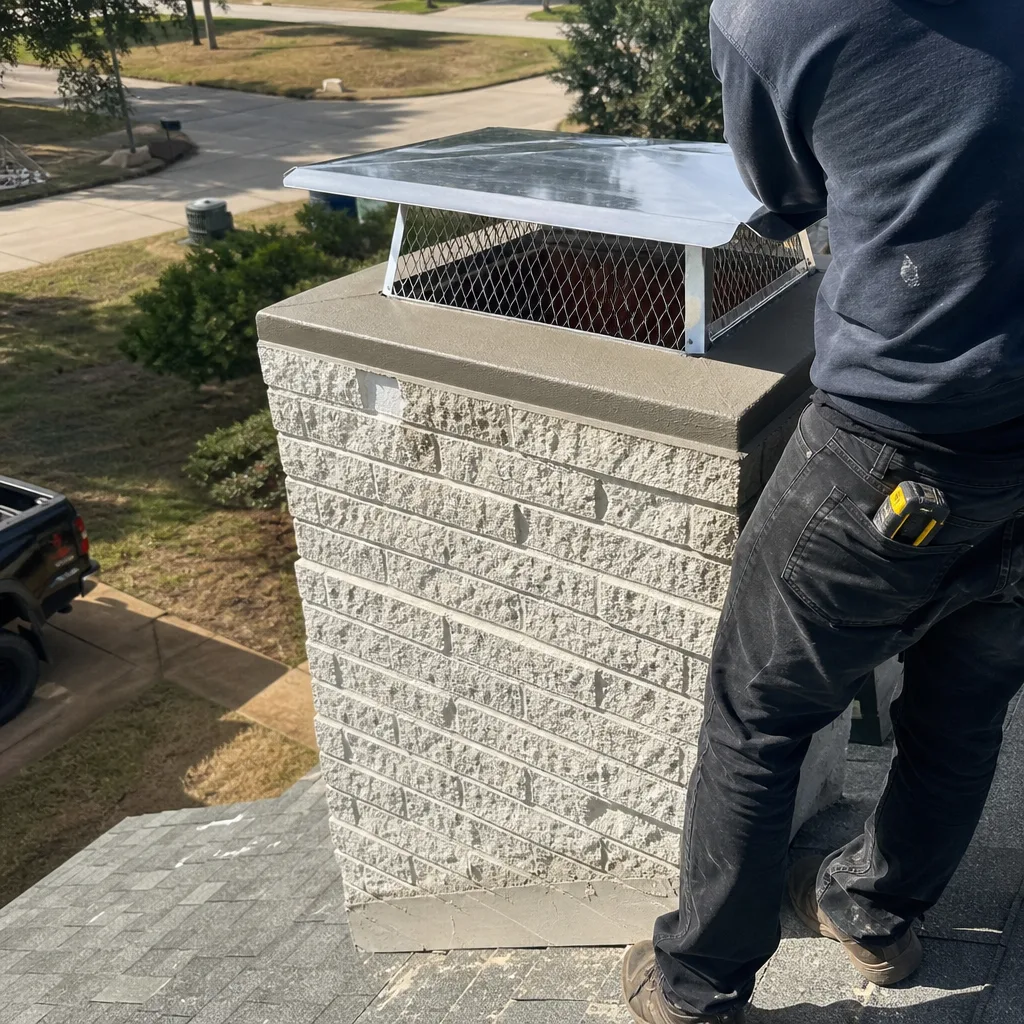 After
After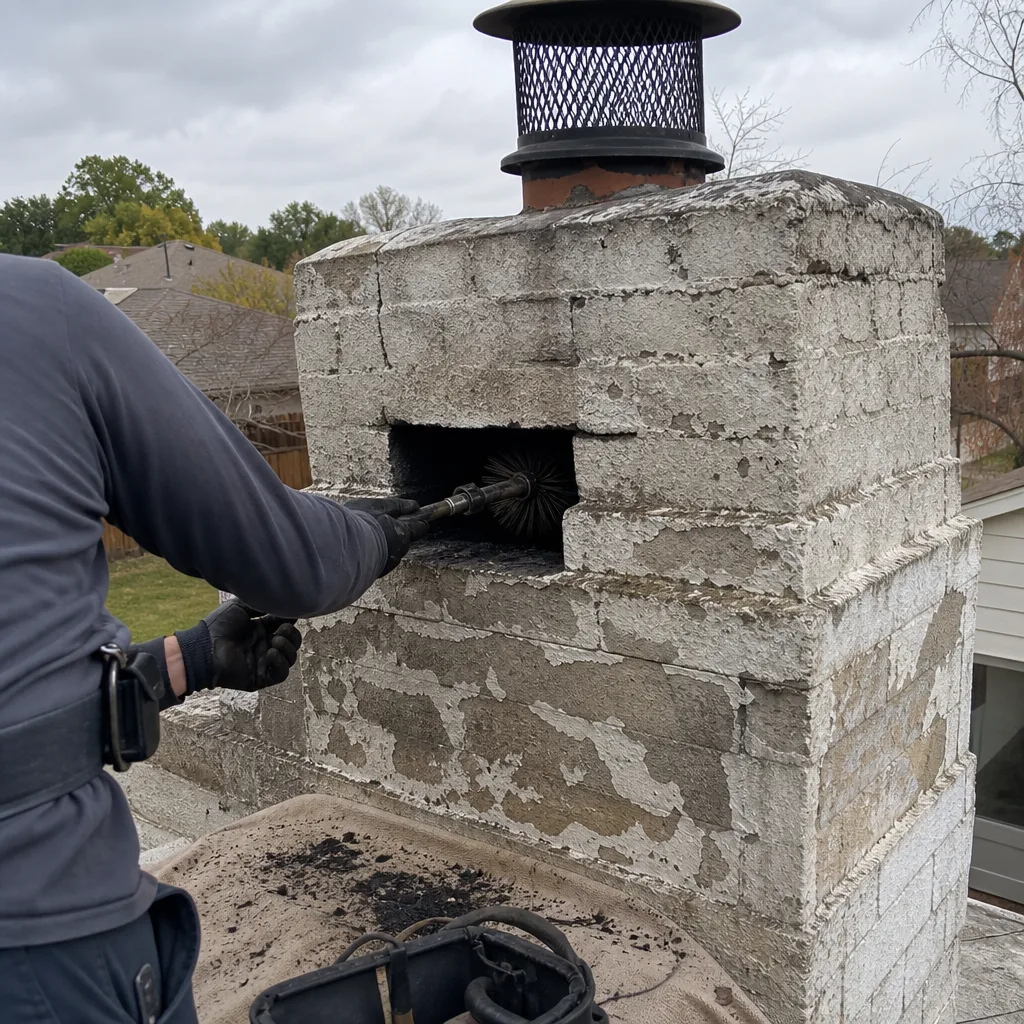 Before
 After
After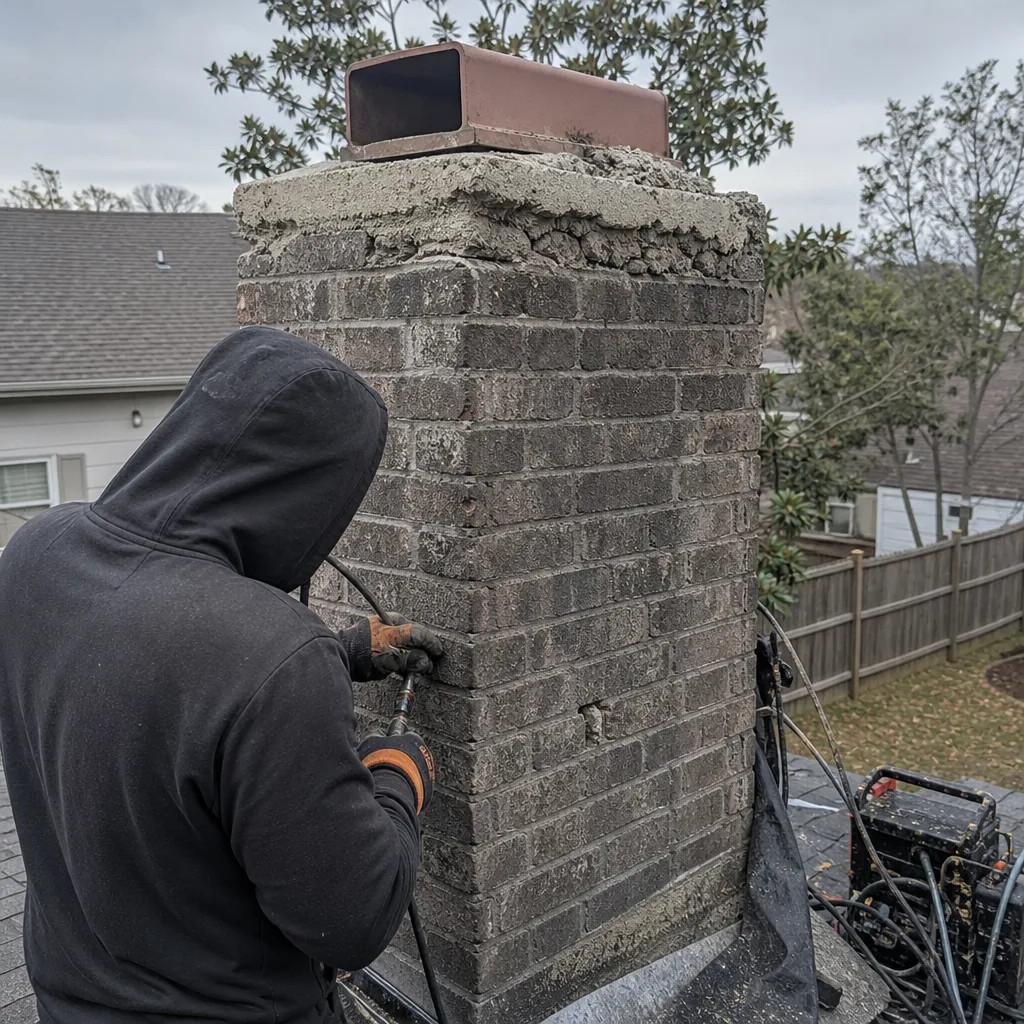 Before
 After
After