
Last updated October 15, 2026
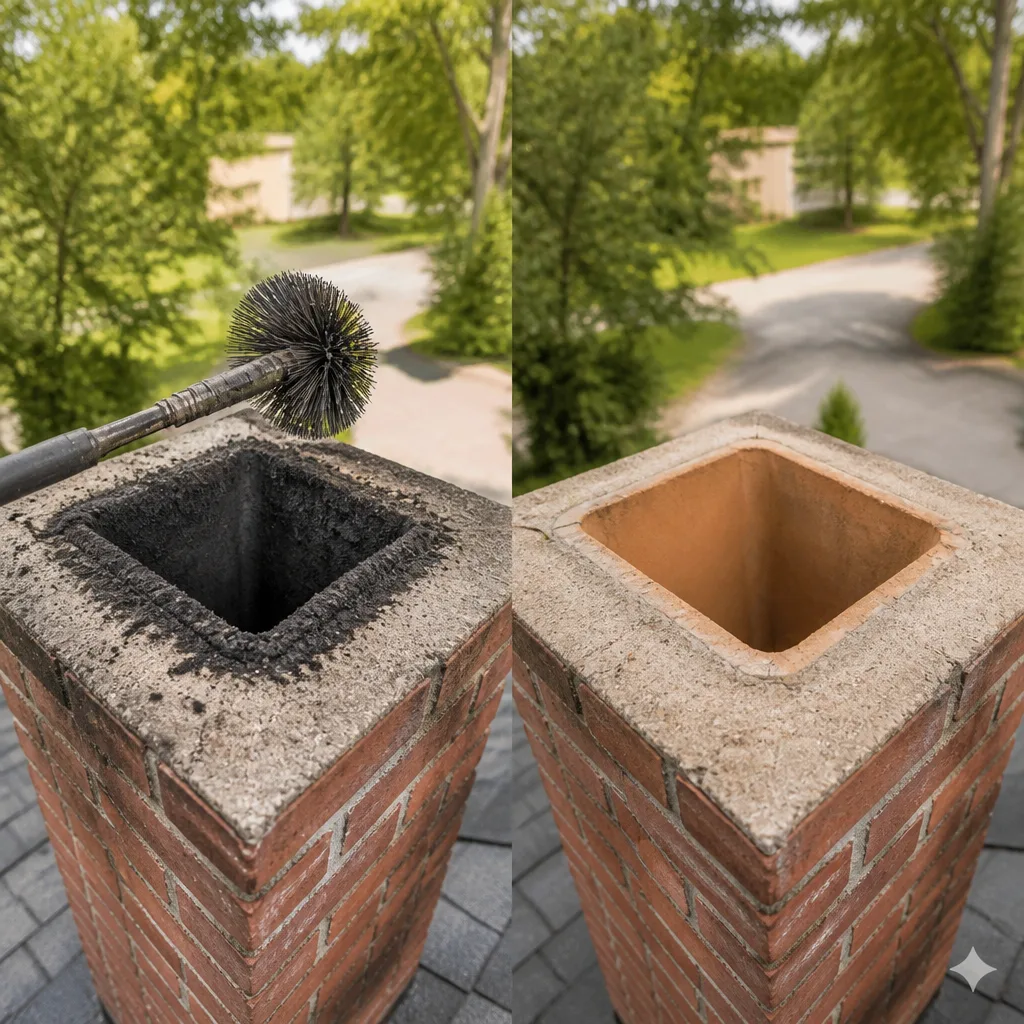 Sweep & inspection
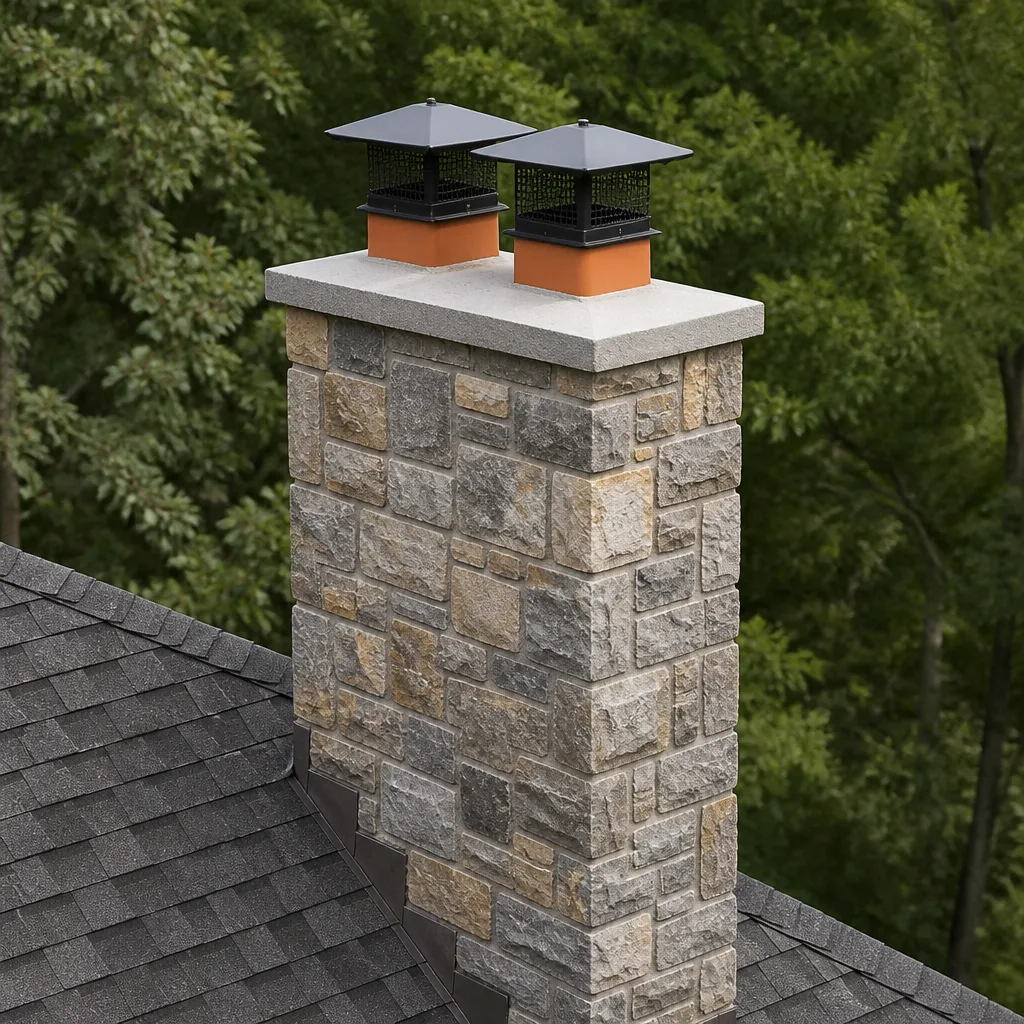 Caps & crowns
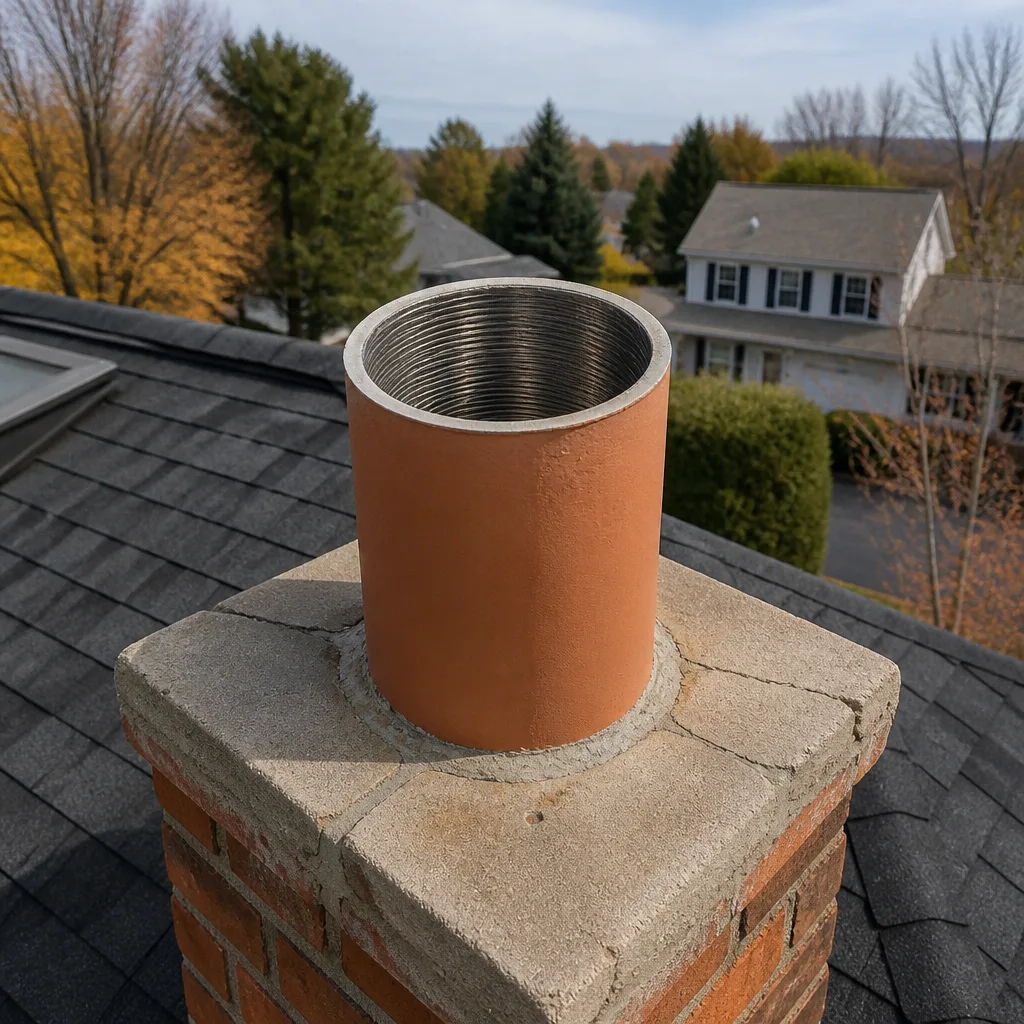 Flue relining
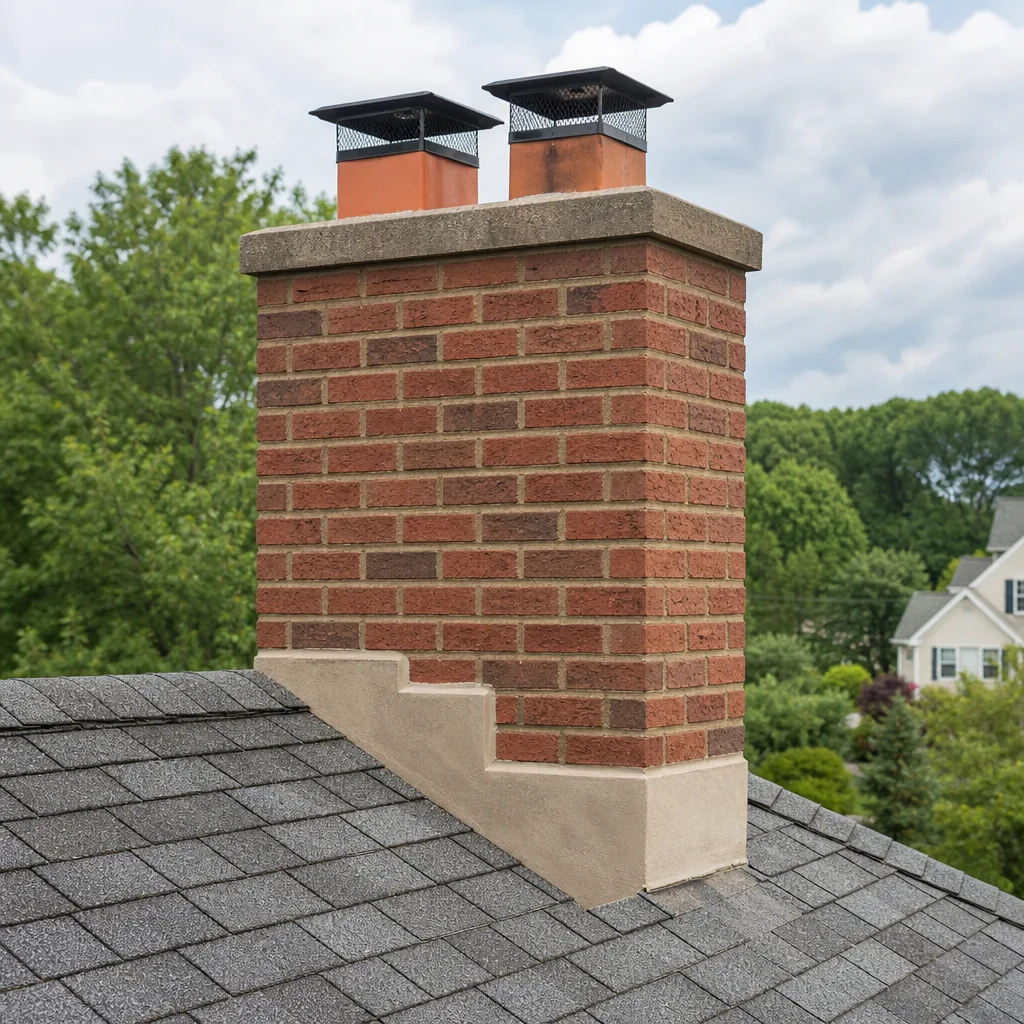 Masonry repair
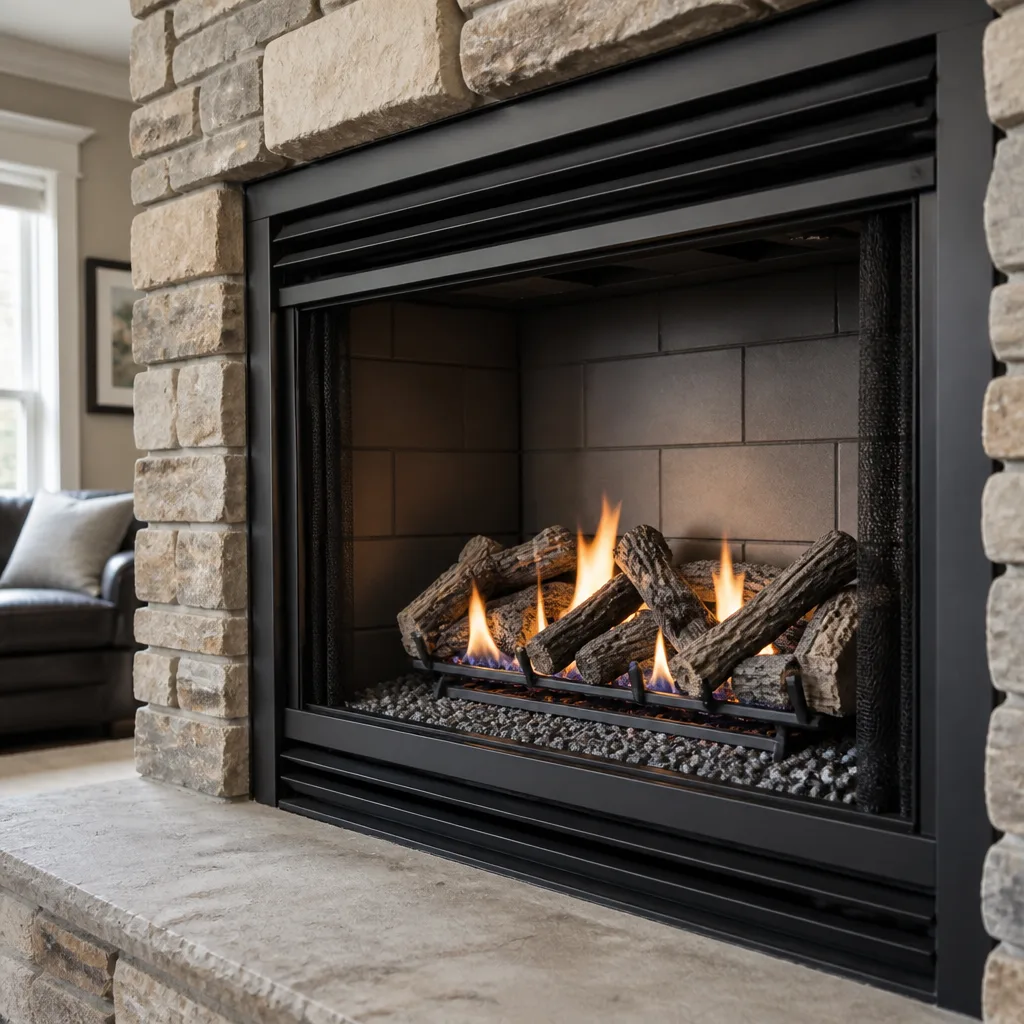 Gas fireplace service
Level 1 sweep and inspection to the NFPA 211 annual standard - flue, crown, cap, and flashing checked and photographed
Chimney sweep logs do not sweep chimneys. They loosen some creosote - which then falls where a brush and vacuum still have to collect it.
Chimney Cleaning Warning Signs: A Dallas Homeowner’s Reference Guide
The white, chalky stain running down the face of your exterior chimney brick has a name: efflorescence. It is not cosmetic, it is not “just what brick does,” and it will not wash away on its own. It is water moving through your masonry, and it usually means the crown or cap over your flue failed at least one full rain season ago. This guide walks you through the warning signs Dallas homeowners see months before a chimney becomes a hazard, when a repair is still a few hundred dollars instead of a few thousand. We’re Flint Chimney Co Dallas, and we’ve been inspecting chimneys throughout the city long enough to know which symptoms matter early and which ones are already emergencies.
Quick Answer
The warning signs that matter most in a Dallas chimney are efflorescence (white mineral staining on exterior brick), spalling (brick faces flaking or popping off), mortar joints that have receded or crumbled, a firebox that smells damp or sharp even when cold, and a damper that closes but never fully seals. A standard chimney sweep in Dallas typically runs between $189 and $329, plus any repair work identified during the inspection. See our DIY vs Professional Chimney Cleaning: The Dallas Homeowner’s Decision Guide to understand what a sweep covers. Most of these symptoms have a repair window of six to eighteen months before they become structural failures.
Styles & brands we work with
Table of Contents
- Efflorescence: The White Stain That Is Never Cosmetic
- Spalling and Mortar Recession: When Brick Starts Letting Go
- The Smoke Chamber Check You Can Do From the Firebox
- Smell Profiles: Creosote, Animals, and Moisture All Smell Different
- Why a Damper That “Works Fine” Can Still Be Failing
- Draft Problems: Dirty Flue vs. Structural Issue
- How Dallas Weather Creates Warning Signs Other Cities Never See
Efflorescence: The White Stain That Is Never Cosmetic
Efflorescence appears as a white, powdery or crystalline deposit on the outside of chimney brick. It forms when water penetrates the masonry, dissolves the natural salts inside the brick and mortar, carries them to the surface, and then evaporates, leaving the salt behind. The stain itself is harmless. The water movement behind it is not.
In Dallas, the freeze-thaw cycle is the primary driver. Winter temperatures here regularly dip below freezing at night and climb back into the 50s by afternoon. Each cycle pushes water deeper into any crack or gap, and each freeze expands that water by roughly 9 percent in volume. That expansion is what turns a hairline crack in a crown into a structural breach. By the time efflorescence is visible from the ground, water has typically been moving through the chimney for at least one full winter, often two.
Here is what the repair window looks like based on what we see in Dallas inspections:
- Light, patchy efflorescence at the top third of the chimney: typically a crown with minor cracking or a cap with a small gap. Repair window: 6 to 12 months before spalling begins. Fix is usually a crown seal or cap replacement, not a rebuild.
- Heavy, widespread efflorescence down the full height of the brick: water is entering at multiple points or the crown has failed entirely. Repair window: 3 to 6 months before spalling and mortar failure accelerate.
- Efflorescence paired with dark staining or visible dampness after rain: the flashing where the chimney meets the roofline has failed. This is the most common source we find in North Dallas and Plano homes built in the 1980s and 1990s. Repair window: immediately. Roof flashing failure lets water into the attic and wall cavities, not just the masonry.
The mistake homeowners make is waiting until the brick itself starts flaking. Efflorescence is the early warning. If you see it, the repair is still cheap. If you wait, it will not be. This is exactly why a standard chimney inspection in Dallas includes a crown and flashing evaluation, documented with photos you can see yourself.
Spalling and Mortar Recession: When Brick Starts Letting Go
Spalling is the technical term for brick faces flaking, popping, or falling off in chunks. Mortar recession is the gradual wearing away of the mortar joints between bricks, leaving the joints recessed instead of flush. Both are structural, and both are caused by the same thing that causes efflorescence: water.
The difference is timing. Efflorescence tells you water is present. Spalling tells you the water has been present long enough to start destroying the masonry. A spalled brick has absorbed enough moisture through freeze-thaw cycles that its outer face has separated from the body of the brick. Once that happens, the brick is compromised and cannot be repaired. It must be replaced.
Mortar recession is more insidious because it happens gradually and looks, to the untrained eye, like normal aging. Here is how to check it yourself from the ground:
- Stand back about 15 feet from the chimney and look at the mortar lines. They should appear as clean, even horizontal and vertical lines.
- Look for joints that appear darker, recessed, or uneven compared to adjacent joints. Run your eye along each horizontal line from top to bottom.
- Pay closest attention to the top 3 to 4 feet of the chimney and the area where the chimney passes through the roof line. These are the highest-wear zones in Dallas.
- If you see mortar joints that look like they have been “scooped out” or are missing entirely in places, the chimney needs tuckpointing before the bricks begin shifting.
Repair costs for spalling and mortar recession in Dallas depend on how far the damage has progressed. Tuckpointing typically runs $12 to $25 per square foot of masonry surface. Replacing individual spalled bricks adds $15 to $35 per brick, depending on access. A partial rebuild of a severely damaged top section starts around $1,500 and goes up from there. Waiting costs money, and the damage compounds every winter. Our process at Flint Chimney Co Dallas is to document every brick and joint condition in writing with a written price before any work begins, so you’re not guessing at scope.
The Smoke Chamber Check You Can Do From the Firebox
Most homeowners have never seen their smoke chamber. It is the angled, funnel-shaped section between the firebox and the flue, and it is where we find some of the most expensive damage in Dallas chimneys because nobody looks at it until smoke stops drafting.
You can check yours without any special equipment. Here is the step-by-step:
- Open the damper fully and shine a bright flashlight up into the chimney.
- Look past the damper frame. You will see brick or stone walls sloping inward and upward. That is the smoke chamber.
- Look for gaps in the mortar joints. In an unlined or poorly parged chamber, you will see missing mortar, loose brick, or joints you could slide a coin into.
- Look for black, shiny creosote glazing on the chamber walls. That tells you creosote has been condensing in that space, which means the chamber is too large or too rough for the flue above it.
- Look for white staining or damp spots on the chamber walls. That tells you water is entering from above and working its way down through the structure.
Why this matters: the smoke chamber is the most common location for chimney fires in the United States, and the reason is simple geometry. Smoke slows down as it enters the wider chamber, and any slowdown gives creosote more time to condense on the walls. A rough, unparged chamber collects more creosote than a smooth one, and that creosote is fuel. If the chamber has gaps or missing mortar, a chimney fire can find its way into the wooden framing around the chimney in a matter of minutes.
In our experience inspecting chimneys across Dallas, including older homes in Lakewood and East Dallas, smoke chamber deterioration follows a pattern: the original parge coat fails after 20 to 30 years, the underlying brick and mortar begin spalling from heat and moisture, and the homeowner never knows because the damage is invisible from the firebox floor without looking up. The fix is a smoke chamber parge coat or a HeatShield resurfacing, which we specify when the damage is confined to the chamber surface rather than the flue itself. Both are documented in writing before work starts.
Smell Profiles: Creosote, Animals, and Moisture All Smell Different
The smell coming from your fireplace is diagnostic information. The problem is that most Dallas homeowners lump every chimney smell into one category: “it smells like fireplace.” But the three most common chimney odors have distinct profiles, and each one points to a different problem with a different cost.
Creosote smell: sharp, smoky, like an old campfire or a cold barbecue pit. This is the smell of creosote deposits in the flue and smoke chamber. It gets stronger on humid days because moisture in the air activates the creosote compounds. In Dallas, creosote smells are most pronounced in spring and early summer, when humidity sits in the 70 to 80 percent range. The fix is a chimney sweep in Dallas, which removes the creosote and typically resolves the odor within 24 hours. A standard sweep in the Dallas market runs $189 to $329 depending on flue size and access difficulty.
Animal smell: organic, musty, like damp insulation or a wet dog that never dried. This is the smell of a bird, squirrel, or raccoon that got into the chimney, nested, or died. The smell is strongest near the firebox and gets worse when the damper is closed, because the decomposition gases have no exit path. In Dallas, chimney swifts are protected by federal law and cannot be removed during nesting season, but squirrels and raccoons are a different matter. The fix is removing the animal, cleaning the nesting material or remains, and installing a proper cap. A Copperfield cap with a bird and animal screen does the prevention job.
Moisture smell: dank, earthy, like a basement after rain or a musty closet. This is the smell of water pooling somewhere it should not be: in the firebox, in the smoke chamber, or in the masonry itself. It usually means the crown, cap, or flashing has failed and water is entering during rain. In Dallas, this smell is most common after spring thunderstorms and the October-November rain season. The fix is identifying and repairing the water entry point, which requires an inspection of the crown, cap, flashing, and flue interior. The moisture smell will not go away until the water stops entering.
One of the first things we ask when a Dallas homeowner calls about a chimney smell is: does it get worse when the air conditioner kicks on? If yes, the chimney is pulling air down through the house, which means there is a drafting problem in addition to whatever is causing the smell. That changes the scope of the work from a simple cleaning to a ventilation evaluation.
Why a Damper That “Works Fine” Can Still Be Failing
Most homeowners test a damper by pulling the lever or turning the handle and confirming that the metal plate opens and closes. That confirms the mechanism moves. It does not confirm the damper is doing its job, which is sealing combustion gases and conditioned air from crossing the chimney throat.
Here is the problem we find in the majority of Dallas homes: the damper rusts, warps, or accumulates enough creosote and debris on its seating surface that it physically closes but does not seal. A closed damper that leaks is easy to miss because you cannot see the gap when you look up at it from the firebox. You can only feel it.
Two tests you can run without any special tools:
- The incense test: Light an incense stick or a piece of newspaper and hold it inside the firebox with the damper closed. If the smoke wavers or gets pulled upward instead of drifting straight up and out of the firebox opening, the damper is leaking. Air is being drawn past it and up the flue.
- The hand test on a hot day: On a day when your air conditioning is running, put your hand just inside the firebox opening. If you feel warm air being pulled into the chimney, the house is losing conditioned air through the damper, which means the damper is leaking.
A leaking damper costs you money year-round. In summer, it lets conditioned air escape up the flue while pulling hot attic air into the house. In winter, it does the reverse. We have seen Dallas homeowners spend hundreds on HVAC service calls only to discover the damper was the silent air leak the whole time.
The fix depends on the failure. A damper with heavy creosote buildup on the seating surface can sometimes be resolved with a thorough cleaning. A warped or rusted damper usually needs replacement. If the original damper throat is in good shape but the damper itself is shot, a top-sealing damper is often the best option because it seals at the top of the flue, where it also blocks rain and animals. We specify damper repairs in writing with the exact scope and price before work begins, and every repair carries the 365-Day Done Right Promise. If a covered repair fails within one year, we return at no charge.
Draft Problems: Dirty Flue vs. Structural Issue
A draft problem means smoke does not flow up the chimney the way it should. It spills into the room, it sits in the firebox instead of rising, or it drafts weakly and then reverses. What the homeowner needs to know is which cause they are dealing with, because the cost difference is enormous: a dirty flue is a $200 to $330 cleaning. A structural flue problem is anywhere from $1,500 to $12,000.
Here is how to tell them apart before the inspection:
Signs that point to a dirty flue:
- The drafting problem developed gradually over the course of a burning season. The chimney drafted fine in November and is weak by February.
- The smoke smell in the house is accompanied by visible creosote deposits on the damper or firebox walls.
- The draft improves noticeably after you burn a hotter fire or open a window near the fireplace.
- The smoke spills mostly when you first light the fire, then settles down once the flue warms up.
A dirty flue in Dallas almost always responds to a standard sweep. The restriction is creosote buildup narrowing the flue opening, which reduces the volume of air the chimney can move. Clean it, and the draft returns.
Signs that point to a structural issue:
- The drafting problem appeared suddenly, or after a storm, or after a tree limb hit the chimney.
- The draft is weak no matter how hot the fire burns or how long it burns.
- You can see missing bricks, cracks in the chimney crown, or mortar joints that have opened up from the ground.
- The drafting problem is accompanied by water stains on walls or ceilings near the chimney.
Structural draft problems come from a damaged or collapsed flue liner, a chimney that is improperly sized for the fireplace opening, a smoke chamber with significant masonry failure, or an exterior masonry breach that allows cold outside air to enter the flue mid-run. The most common structural fix we perform in Dallas is chimney repair in the form of a flue relining, which replaces the inner liner that channels smoke safely out of the house. We use DuraFlex stainless steel liners when the original clay tile liner has cracked or separated, and we document the damage with camera photos before recommending anything. You will see the evidence yourself before a dollar of repair work is approved.
The distinction matters because a homeowner who calls a sweep company for a structural problem gets a cleaning and still has the problem. A homeowner who calls a structural specialist for a dirty flue pays ten times too much. At Flint Chimney Co Dallas, every sweep includes an inspection because the two have to go together. You cannot clean a chimney properly without looking at what you are cleaning, and you cannot diagnose a chimney properly without seeing it clean.
How Dallas Weather Creates Warning Signs Other Cities Never See
Dallas sits in a climate that punishes masonry in ways Chicago and Seattle do not. In Chicago, the winter is cold and stays cold, so the freeze-thaw cycle moves slowly. In Dallas, the temperature swings 40 to 50 degrees on a regular winter day, and each swing is a freeze-thaw event. A chimney in Dallas can go through more freeze-thaw cycles in one winter than a Chicago chimney goes through in five.
Add to that the moisture profile. Dallas gets about 38 inches of rain per year, with the heaviest concentrations in May and October. The spring rains come with severe thunderstorms and hail, which pound crown flashing and dislodge chimney caps. The fall rains come after a long, dry summer has already opened up cracks in dried-out mortar. The water finds those cracks immediately.
And then there is the hail. Dallas is in the highest hail-frequency zone in the United States outside of the central Great Plains. A hailstorm can damage a chimney cap, crack a crown, or dent a flashing in ways that are invisible from the ground and undetectable without an on-roof inspection. We recommend Dallas homeowners inspect their chimney after any hailstorm that leaves dents in their vehicles or damage to their roof shingles. If the roof took hail damage, the chimney probably did too.
The pattern we see in Dallas goes like this: a hailstorm or a wet spring opens a small gap in the crown or flashing. The summer heat dries the masonry and widens the gap. The fall rains push water in. The winter freeze-thaw cycles turn the water into a wedge. By the following spring, efflorescence appears. By the following winter, spalling begins. The homeowner calls us in the third winter, and by then the repair is a rebuild instead of a seal. That is why this guide focuses on the early indicators. The warning signs are visible. Most people just do not know what they are looking at.
If you want to understand what your specific chimney is dealing with, start with our Flint Chimney Co Dallas home page to see the full scope of what we cover, or go directly to our chimney inspection in Dallas page to learn what a documented inspection includes. Every inspection we perform includes photos of the crown, flashing, flue interior, smoke chamber, and firebox, so you are looking at the evidence yourself.
Common Mistakes to Avoid
- Ignoring efflorescence because it is “just cosmetic.” White staining is water evidence. By the time the brick spalls, you have moved from prevention to repair. Efflorescence is the earliest and cheapest signal your chimney will give you.
- Assuming a closed damper means a sealed damper. Dampers rust, warp, and gunk up. Test yours with smoke or your hand on a hot day. A leaking damper costs you HVAC dollars every month.
- Smelling creosote and lighting a fire anyway. That sharp, smoky smell on a humid Dallas day means creosote is present. Burning before it is removed is how chimney fires start.
- Treating a draft problem by opening a window and living with it. The window opening masks the symptom. The flue restriction or structural damage underneath is still there and getting worse.
- Waiting until a chimney professional finds you. Chimney damage never self-corrects. Water, creosote, and freeze-thaw cycles only move in one direction.
- Getting a sweep without an inspection. A sweep cleans what is there. An inspection finds what is wrong. In a Dallas climate, you need both.
- Comparing chimney companies on price alone. A cheap sweep that misses a smoke chamber breach costs you thousands later. Compare on documentation, guarantee terms, and whether the price is written before work starts.
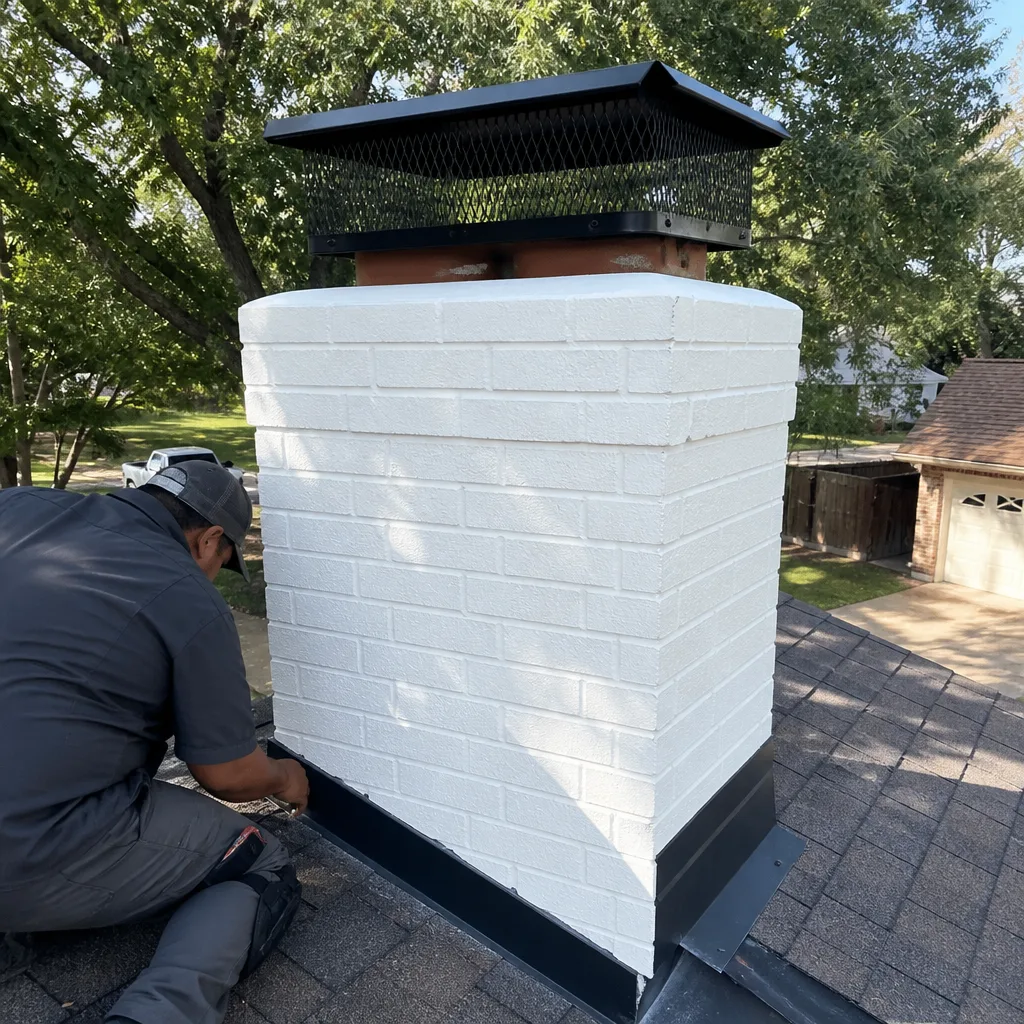
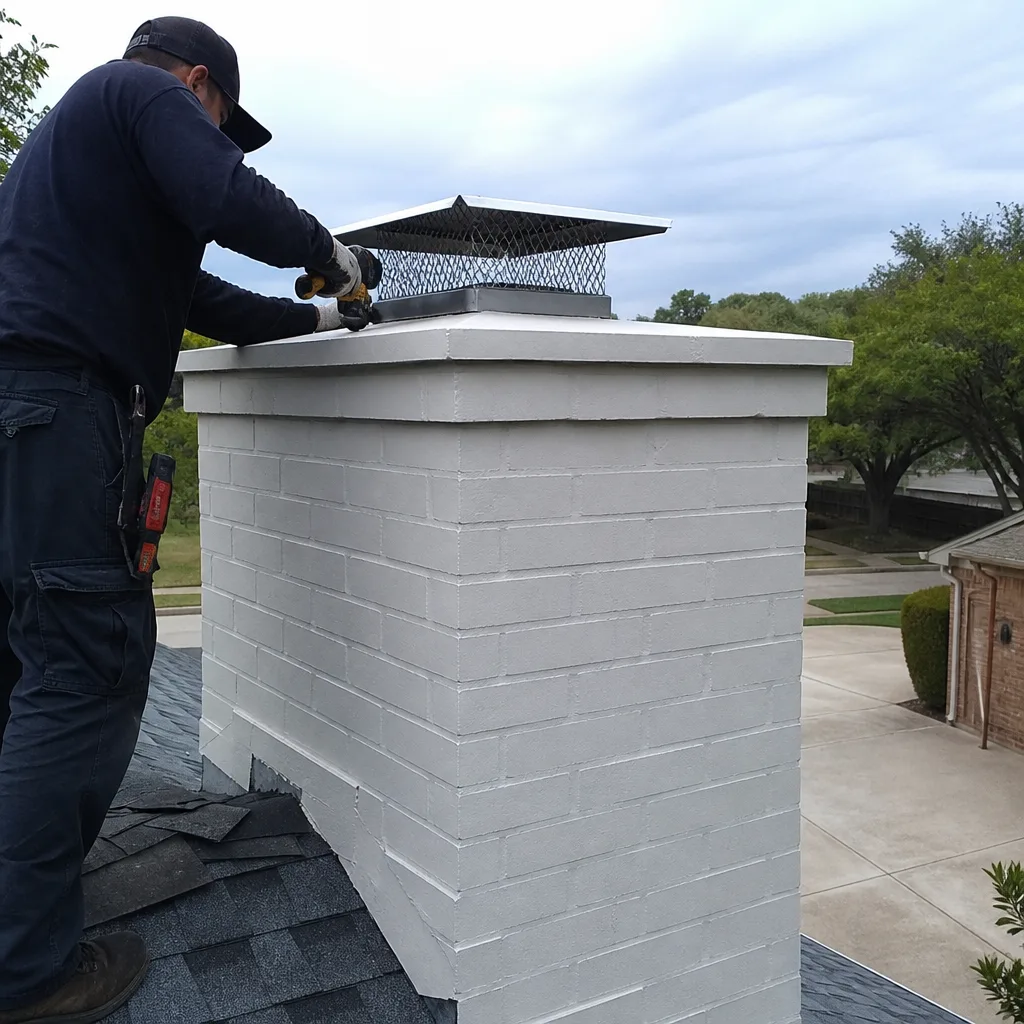
See the difference
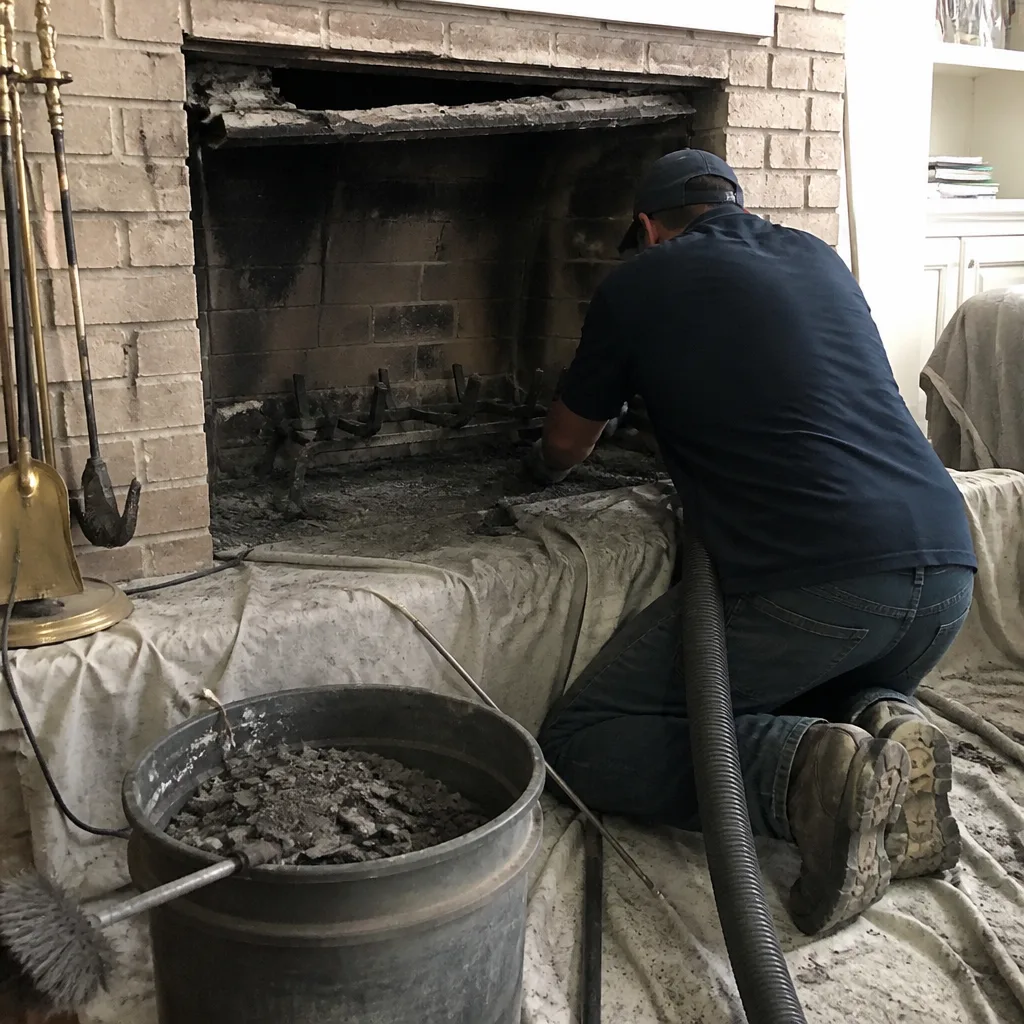 Before
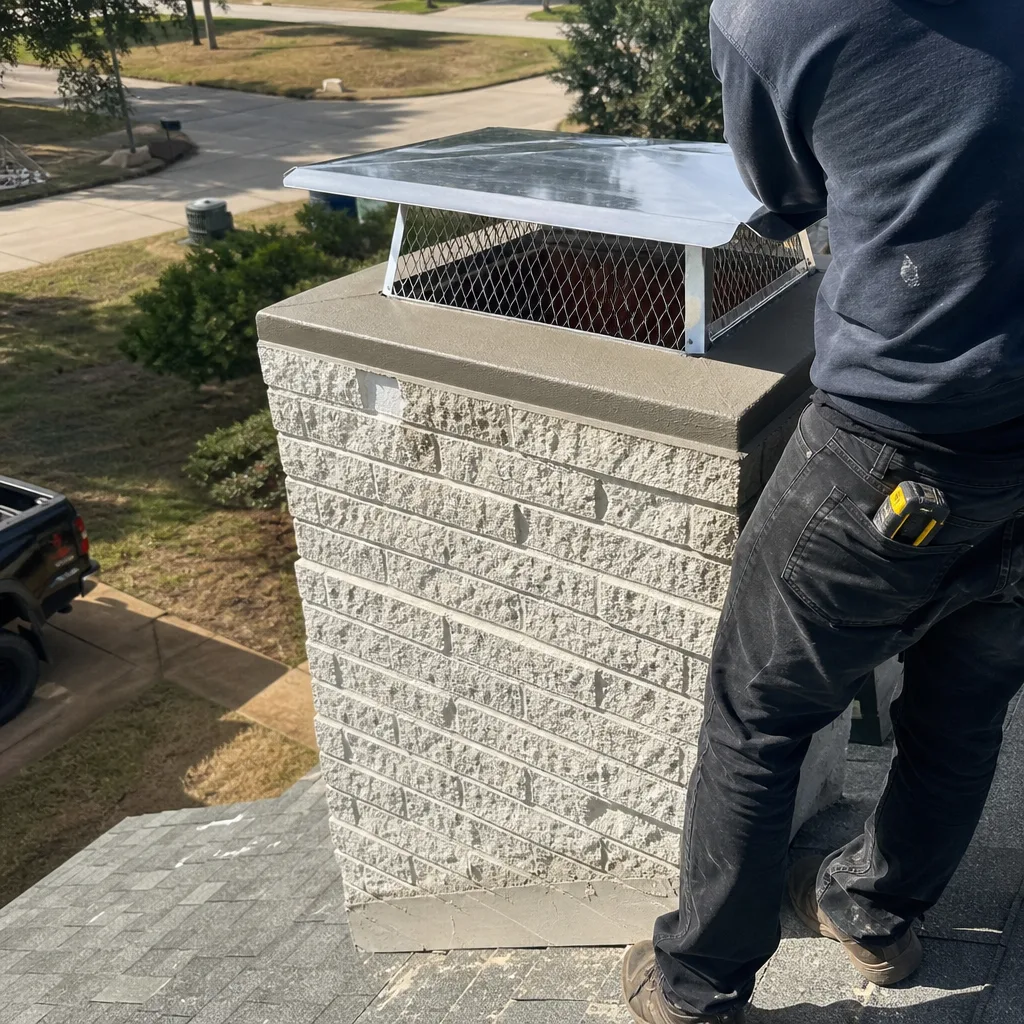 After
After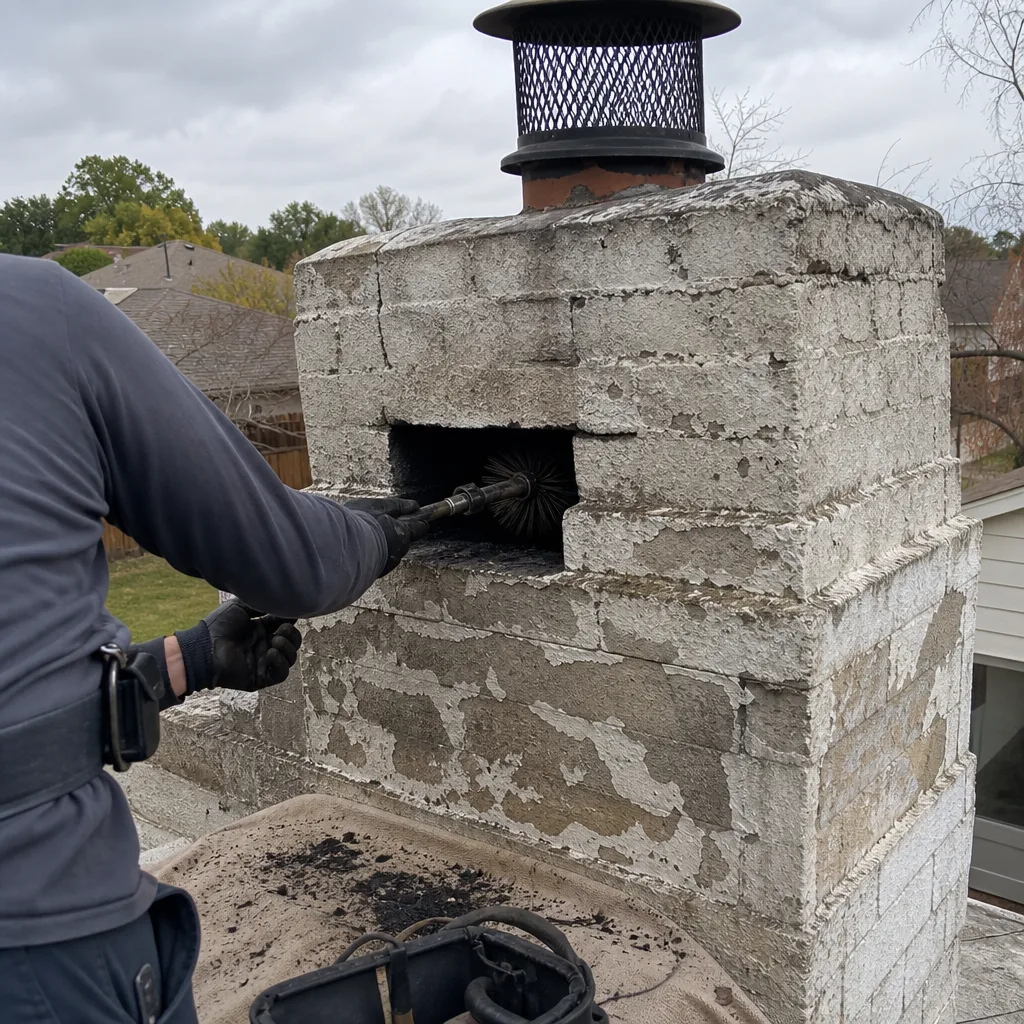 Before
 After
After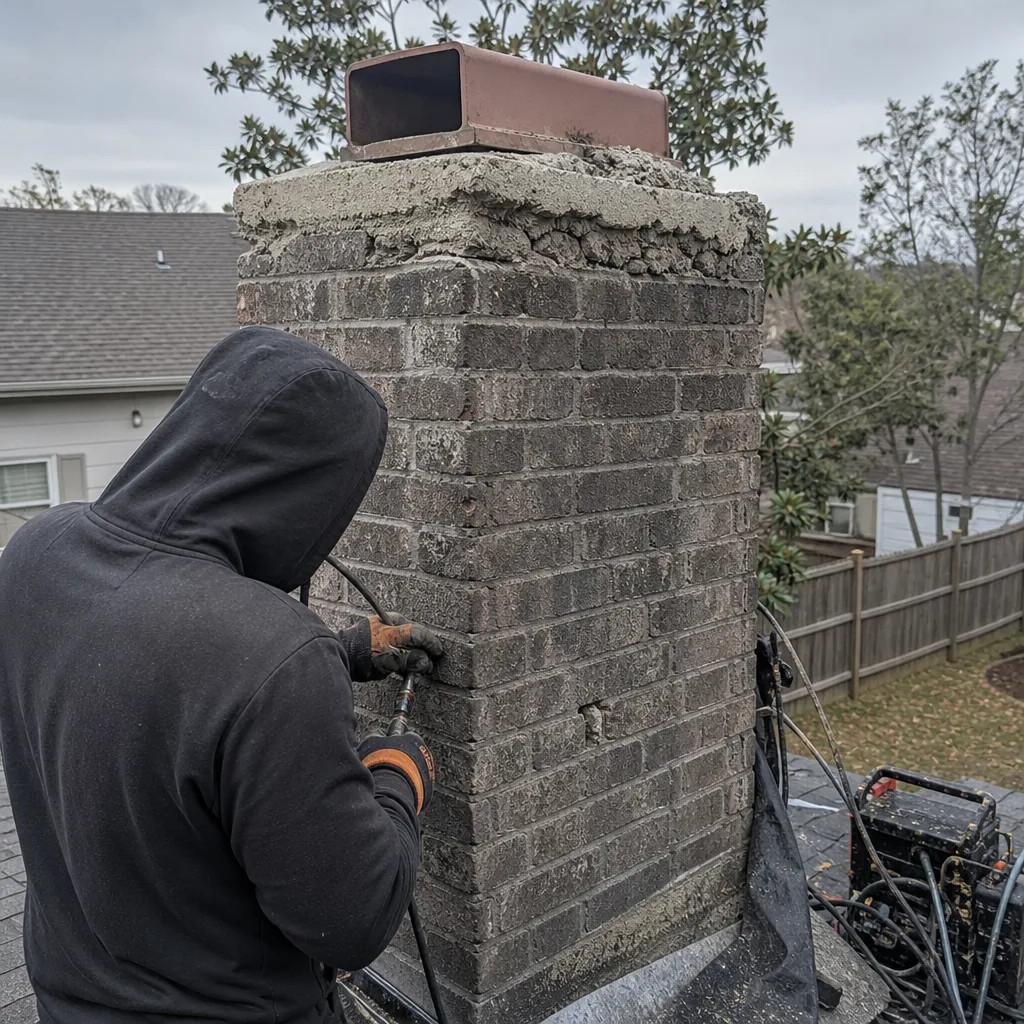 Before
 After
AfterWhen to Call a Professional
Call a professional when you see efflorescence, spalling, or receded mortar on any exterior chimney surface. Call when you smell creosote, animal odor, or moisture coming from the firebox, because each one points to a different problem that needs a different fix. Call when you have run the damper leak test and felt air moving past a closed damper. Call when your draft has weakened over the season or failed suddenly after a storm. And call after any significant hail event in your neighborhood. None of these signals gets better on its own. Flint Chimney Co Dallas offers free estimates in Dallas. Call (361) 492-4099 and a real person will answer, day or night.
Frequently Asked Questions
A standard chimney sweep in Dallas typically runs $189 to $329, depending on flue size, creosote level, and roof access difficulty. Additional services like a camera inspection, animal removal, or dryer vent cleaning are priced separately and always documented in writing before work begins. Call (361) 492-4099 for an exact quote on your chimney. Estimates are free.
A wood-burning chimney in Dallas should be swept after every 50 to 60 burns, which for most homeowners means once per burning season. For a full breakdown of seasonal tasks, see our Chimney Sweep Maintenance Checklist for Dallas Homeowners. Gas log chimneys should be inspected annually but swept less often, since gas produces far less creosote. Homes that burn unseasoned wood or burn through the extended Dallas fall and spring shoulder seasons may need two sweeps per year.
You need a new liner only if the existing liner has cracks, gaps, or spalling that is documented with camera evidence. A reputable company will show you the photos and explain what you are seeing before recommending a reline. At Flint Chimney Co Dallas, we never recommend a liner replacement without camera documentation you can see yourself, and the scope and price are written before any work starts. A liner is a fire safety barrier. If yours is intact, you keep it.
The most common consequences in the Dallas climate are creosote accumulation that leads to a chimney fire, water intrusion that leads to spalling and structural deterioration, and a leaking damper that costs you HVAC dollars every month. The repair costs escalate from a few hundred dollars for a sweep to several thousand for a rebuild. The timeline is usually two to five years of neglect from first warning sign to major structural work.
You can brush a chimney yourself if you have the right rods, brushes, and can safely access the roof, and many Dallas homeowners do. What you cannot do yourself is inspect the smoke chamber, flue interior, crown, and flashing with the same documentation a professional inspection provides. The cleaning is the simple part. The diagnosis is what protects you.
Flint Chimney Co Dallas schedules inspections during normal business hours, and a live person answers the phone 24 hours a day to book the appointment. Call (361) 492-4099 and you will speak with a person, not a voicemail tree.
The Bottom Line
The warning signs that matter in a Dallas chimney are visible months before they become expensive, and every one of them has a name: efflorescence, spalling, mortar recession, smoke chamber deterioration, damper leakage, and draft failure. Learn to recognize them, and you control the repair timeline. Ignore them, and the repair timeline controls you. Dallas weather accelerates chimney damage through constant freeze-thaw cycling, spring hail, and heavy seasonal rain, which means the city’s chimneys warn earlier and fail faster than homeowners expect. The discipline is simple: look at your chimney once a season, run the smell and damper tests, and call when the evidence appears. For more guides & resources on protecting your chimney, explore our blog. The cost of acting early is a sweep or a seal. The cost of waiting is a rebuild.
Written by Hank Delano, Owner at Flint Chimney Co Dallas, serving Dallas since 2002.