
Last updated October 15, 2026
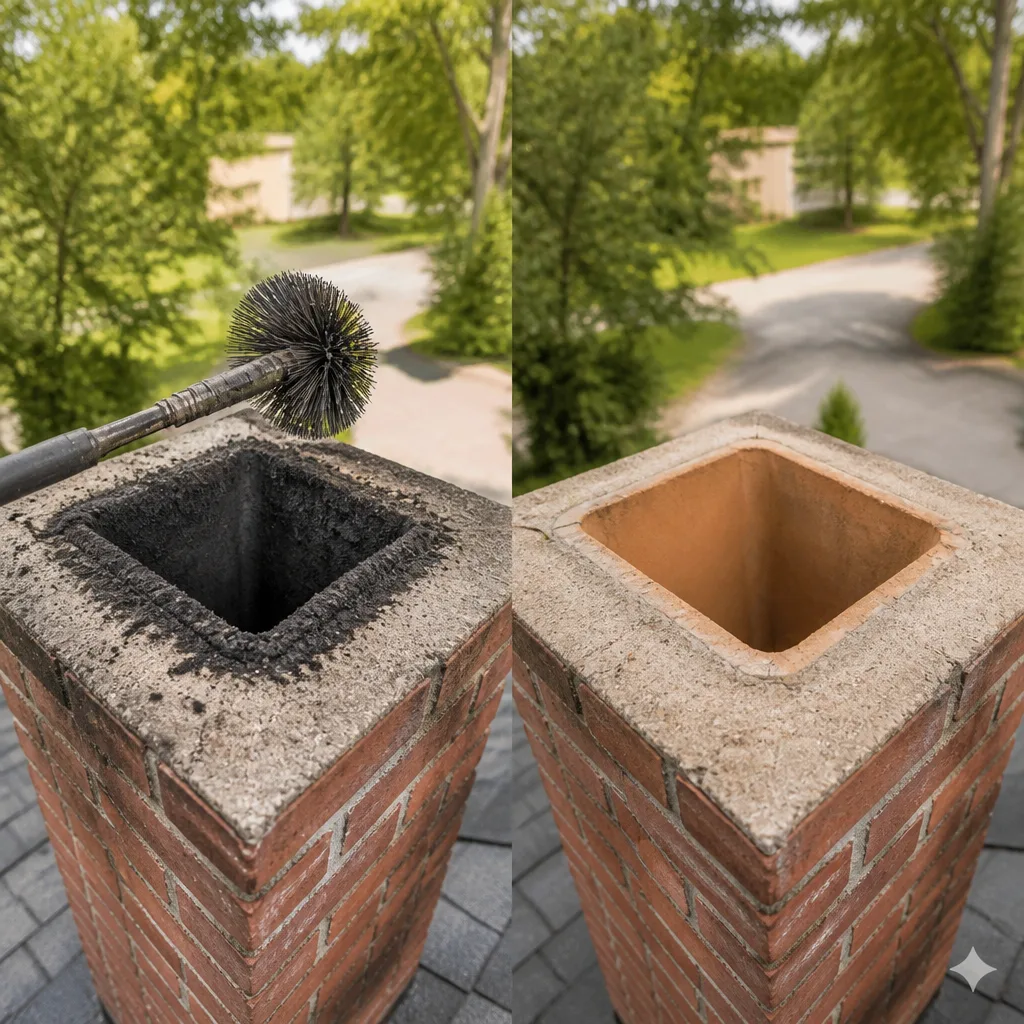 Sweep & inspection
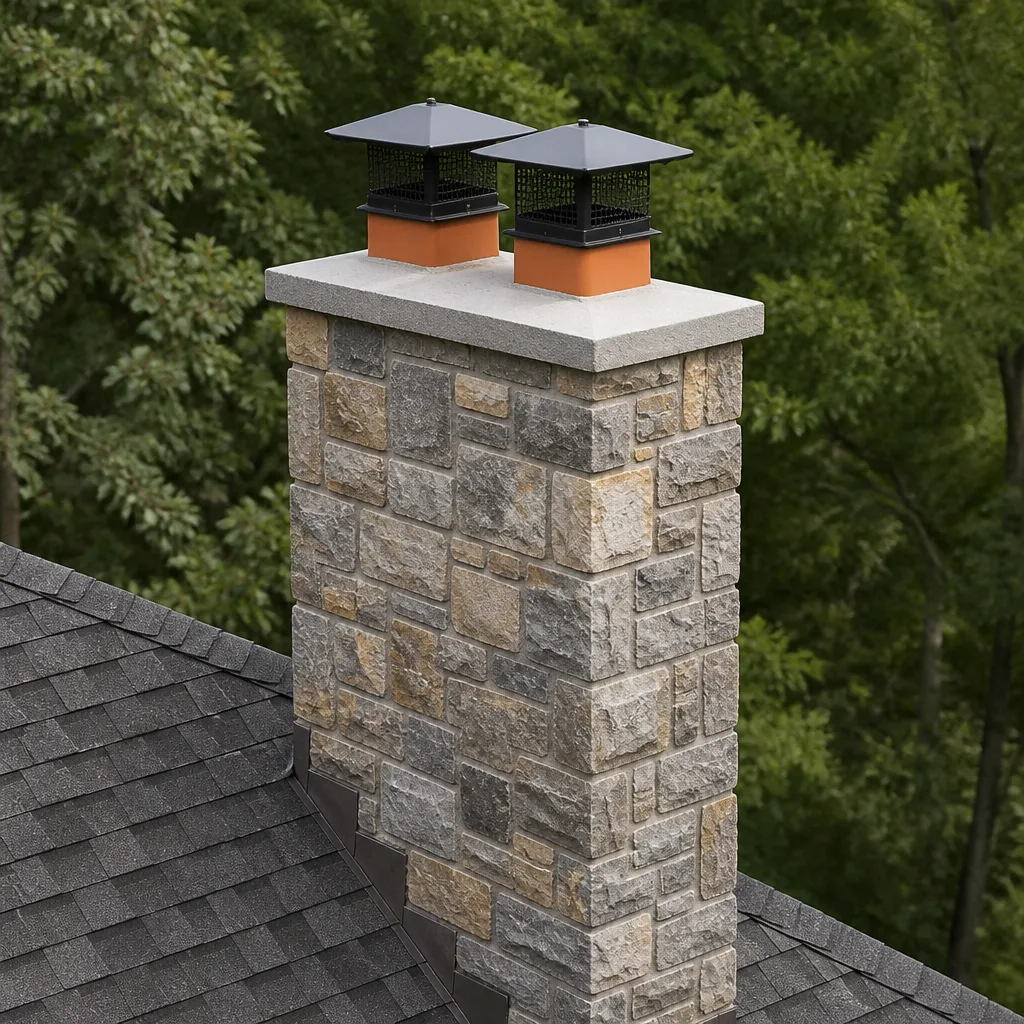 Caps & crowns
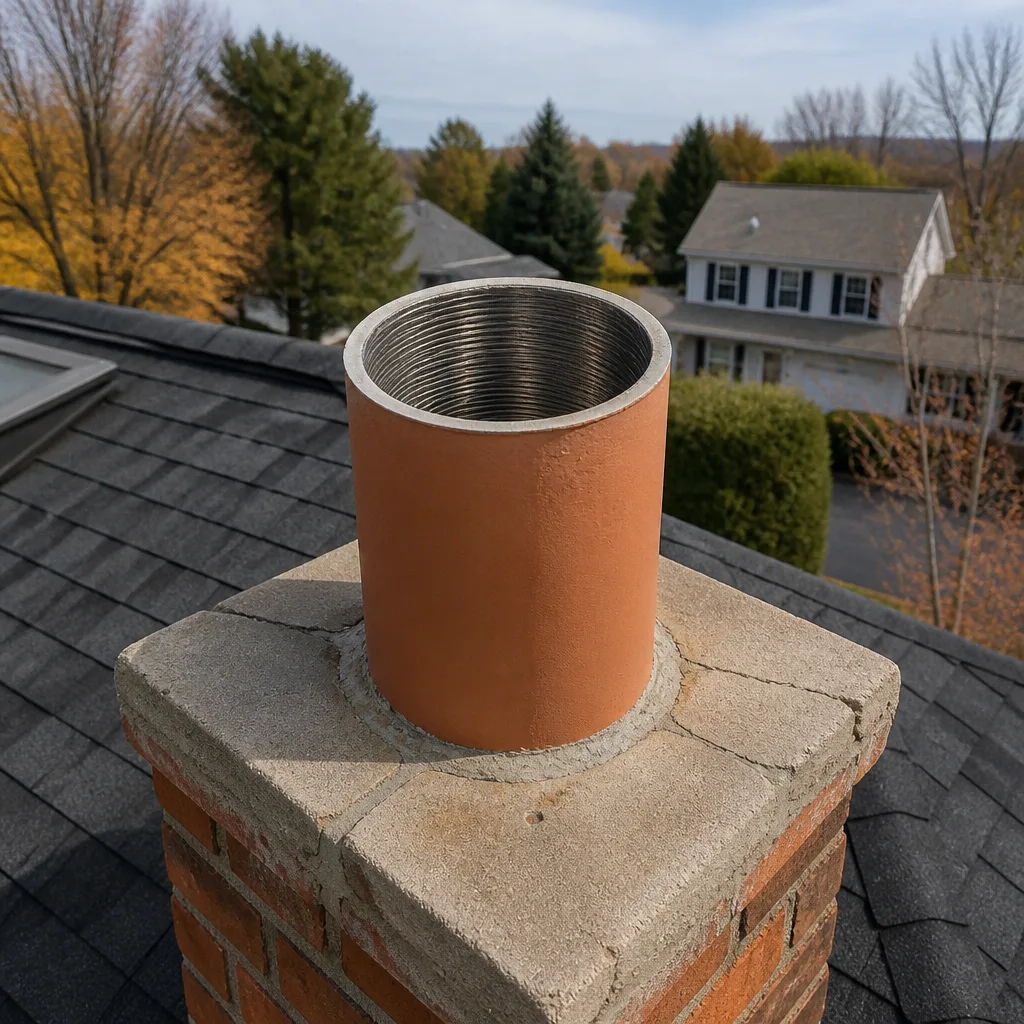 Flue relining
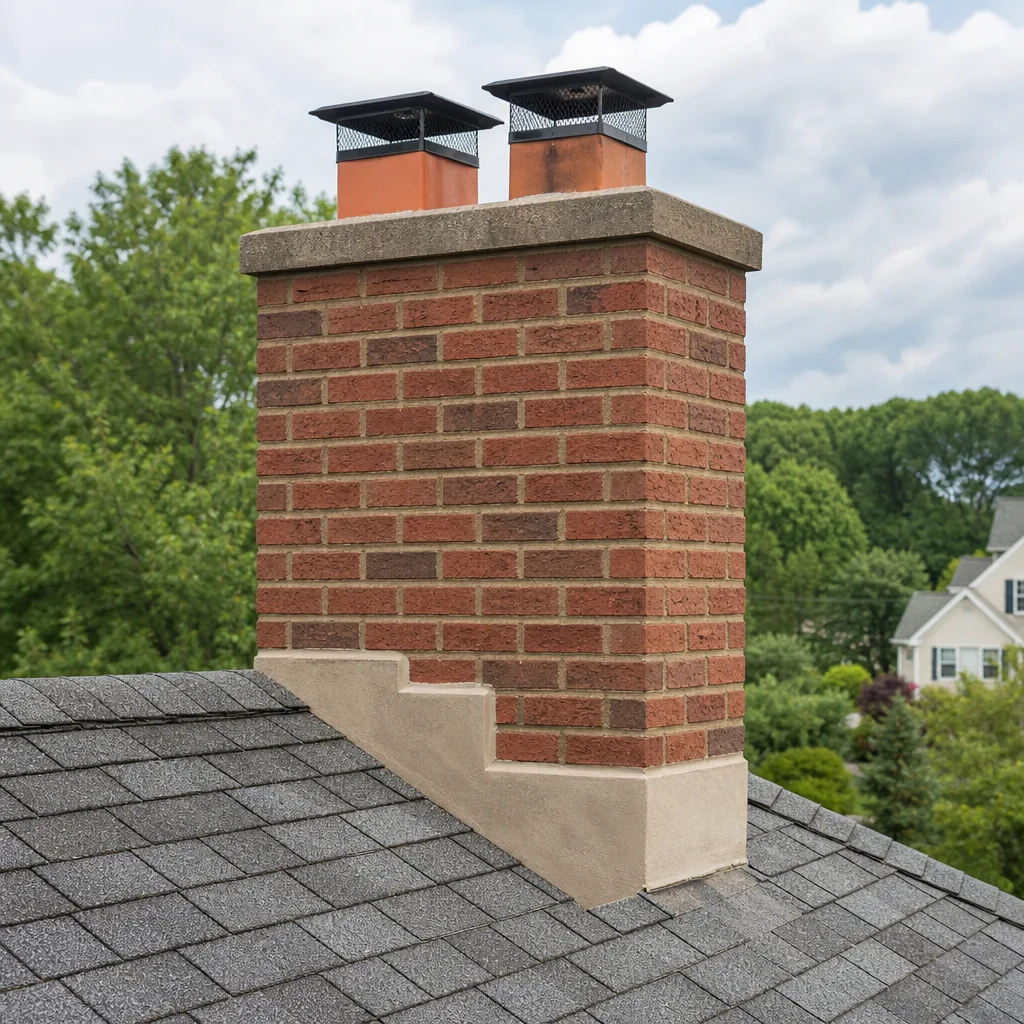 Masonry repair
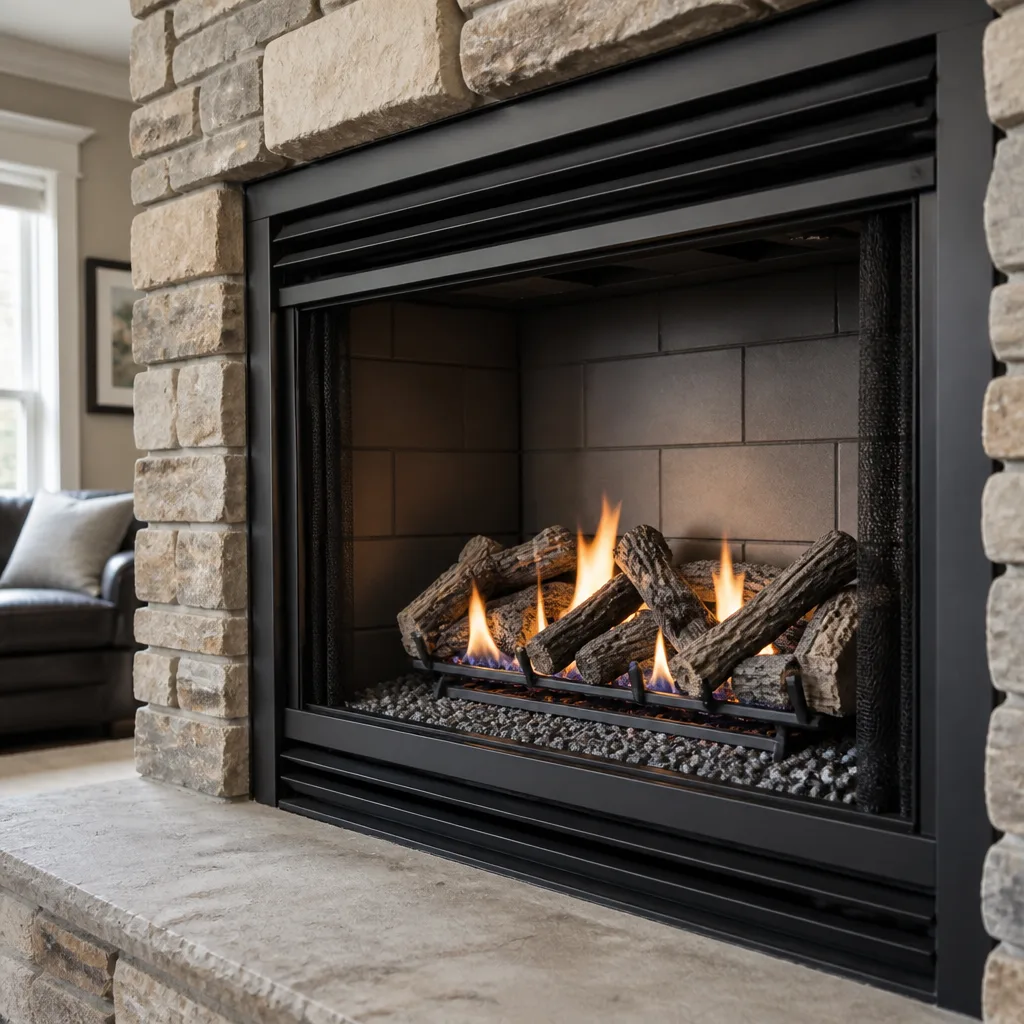 Gas fireplace service
Level 1 sweep and inspection to the NFPA 211 annual standard - flue, crown, cap, and flashing checked and photographed
Chimney sweep logs do not sweep chimneys. They loosen some creosote - which then falls where a brush and vacuum still have to collect it.
Chimney Sweep Maintenance Checklist for Dallas Homeowners
A standard chimney checklist has about a dozen items on it. Fewer than four of them tell you what “bad” actually looks like. That means most Dallas homeowners can work through an entire maintenance list, check every box, and still have no idea whether their chimney is safe to light in October. This guide fixes that. Every item below includes a concrete pass/fail condition, not a vague instruction, so you’ll finish knowing exactly what needs attention, what can wait, and what you should photograph before calling for a flue cleaning or masonry repair in Dallas.
Quick Answer
A complete chimney maintenance check in Dallas covers eight inspection points: the chimney cap, the crown, the flashing, the exterior masonry, the damper, the flue, the smoke chamber, and the firebox. Each item has a specific visual or physical threshold that determines whether it passes or fails. A standard chimney sweep and inspection in Dallas typically runs $149 – $279 depending on the condition, height, and accessibility of the system.
Styles & brands we work with
Table of Contents
- Why the Inspection Order Matters More Than the List Itself
- 1. Chimney Cap: What “Intact” Actually Means
- 2. Crown: The Concrete Slab That Fails Quietly
- 3. Flashing: Reading the Metal Before Water Does
- 4. Masonry and Mortar: The Millimeter Standard for Repointing
- 5. Damper: The Dollar-Bill Test and What a Fail Costs You
- 6. Flue and Smoke Chamber: Where Creosote Hides and Why It Matters
- 7. The Burn-Season Log: What to Record Every Year in Dallas
- Common Mistakes to Avoid
- When to Call a Professional
Why the Inspection Order Matters More Than the List Itself
Most checklists jump straight from “look at the chimney” to “clean the fireplace.” That skips the diagnostic sequence that actually protects a Dallas house. Here’s why order matters: water enters from the top down, and creosote builds from the bottom up. If you check the firebox first and find dampness, you still don’t know whether the water came through the crown, the flashing, or the cap. You only know it’s wet. Inspect from the top down and you’ll find the entry point before you deal with the symptom.
Here’s the sequence we use on every chimney inspection in Dallas, and why each step comes before the next:
- The cap – this is the first thing rain hits. If it’s damaged, water has already gone inside.
- The crown – the concrete slab at the top of the chimney. Cracks here let water run down the flue and into the masonry from the inside.
- The flashing – the metal where the chimney meets the roof. Failed flashing is the single most common cause of chimney leaks in Dallas homes built before 1990.
- Exterior masonry – the bricks and mortar joints visible from the ground. Spalling brick and receding mortar mean water has already penetrated the surface.
- The damper – the metal door inside that seals the flue. A warped damper lets heated Dallas air escape up the chimney in summer and cold air drop in during winter.
- The flue and smoke chamber – the inner passage where creosote accumulates. This is where you look for buildup that can ignite.
- The firebox – the chamber where the fire burns. It’s last because its condition usually reflects problems that started higher up.
Work that sequence and you’ll know whether a wet firebox is a flue problem, a crown problem, or a flashing problem before you call anyone for an estimate.
1. Chimney Cap: What “Intact” Actually Means
The cap is the metal lid on top of the flue opening. Its job is stopping rain, animals, and debris from falling straight into the chimney. In Dallas, where spring storms are common and squirrels, raccoons, and chimney swifts are active year-round, a missing or damaged cap is an active problem, not a cosmetic issue.
Here’s the pass/fail standard:
- PASS: The cap sits level on the flue. The mesh screening around the sides has no gaps wider than half an inch. There is no rust through the metal. The cap moves slightly when pressed but springs back.
- FAIL: The cap is tilted, dented in from a storm, missing mesh sections, or rusted badly enough that daylight shows through. Also a fail: the cap is sitting on the flue tile without a proper base.
- ACTION NEEDED NOW: The cap is missing entirely. An open flue is an invitation to rain, nesting animals, and debris that restricts draft and accelerates creosote buildup.
In our experience across Dallas, the neighborhood that sees the most cap failures is the one with the tallest trees. North Dallas around Preston Hollow and the older sections of Richardson have massive mature oaks and pecans. A falling limb can knock a cap loose or punch through the mesh without anyone noticing until the first fire of the season smells like the inside of a wet attic.
Replacement caps purchased at a hardware store work about as well as anything for a simple single-flue chimney. But a chimney with two flues, a custom crown, or a tall stack typically needs a measured stainless steel cap, and those need to come from a supplier like Copperfield or Olympia Chimney so the fit is right. A poorly fitted cap is almost as bad as no cap at all.
2. Crown: The Concrete Slab That Fails Quietly
The crown is the concrete or mortar slab that covers the top of the chimney structure, surrounding the flue opening. It’s not the cap. The cap covers the hole. The crown covers everything else. It’s the umbrella.
In Dallas, the crown fails quietly because of the climate. Summer heat expands the concrete. Winter cold contracts it. That daily and seasonal cycle is what opens hairline cracks. Then rain gets in, and in the rare Dallas freeze, that trapped water expands and widens the cracks further. A crown that looked fine in March can be structurally compromised by the following February.
Here’s how to grade a crown without ever touching it:
- PASS: The surface is smooth, unbroken, and slopes slightly away from the flue so water drains toward the outside edges, not toward the center.
- MINOR ISSUE: Hairline cracks less than one-sixteenth of an inch wide. These can be sealed with a high-quality crown sealant like Gelco. This is a homeowner-able fix, but the crown needs to be clean and dry for the sealant to bond.
- FAIL: Cracks wider than one-sixteenth of an inch, sections that have broken off, a sunken or pitted surface, or a crown that doesn’t extend at least two inches beyond the brick line on all sides. If you can fit a quarter into the crack, it’s already letting water through.
If the crown fails, the water doesn’t run down the outside of the chimney. It runs down between the outside brick and the flue liner, inside the chimney structure. You won’t see it. You’ll see the result two years later when the bricks in the attic or the upstairs ceiling start showing water stains. By that time, the repair is no longer a $300 crown seal. It’s a repointing job, possibly a re-build, and the damage is already done.
3. Flashing: Reading the Metal Before Water Does
Flashing is the sheet metal that seals the gap where the chimney passes through the roof. In Dallas, flashing takes damage from two directions: the same freeze-thaw cycle that cracks crowns, and the expanding and contracting of the roof decking itself in summer heat. Roofs move. Chimneys don’t. The metal connecting them takes all that stress.
A failing flashing usually announces itself as a ceiling stain in the room closest to the chimney, often on the upper floor or in the attic. But you don’t have to wait for the water to show up. Here’s what to look for from the ground or a ladder:
- PASS: Flashing is flat and tight against both the brick and the roof. The step flashing (the pieces that interleave with the shingles) sits under the shingles on the uphill side and over the shingles on the downhill side. The counter-flashing (the piece embedded in the brick and folded down over the step flashing) overlaps by at least one inch. No gaps, no lifted edges, no visible caulk.
- MINOR ISSUE: Old caulk pulling away at the corners where the flashing meets the chimney. This can work as a temporary fix but caulk alone is never a permanent flashing repair. It fails within a year or two in Dallas heat.
- FAIL: Lifted, dented, or rusted flashing. Flashing that has pulled away from the brick by more than one-eighth of an inch. Any spot where you can see roofing nails exposed. Any area patched with roofing cement or silicone caulk from a previous owner.
If you’re not comfortable getting on a ladder with binoculars or a camera zoom, that’s fine. This is one of the items we check during a chimney inspection in Dallas. But learn what good flashing looks like. It will help you speak the language when you call for an estimate.
4. Masonry and Mortar: The Millimeter Standard for Repointing
Here’s the item most checklists get wrong. They say “inspect the brick and mortar.” They don’t say what bad looks like. Here’s the standard we use on every chimney repair in Dallas, and you can use it from the ground.
Mortar joints: Run your finger along a mortar joint if you can safely reach it from the ground. If the mortar is recessed more than six millimeters (about the width of a standard pencil) from the face of the brick, the joint is failing. Mortar is supposed to sit nearly flush with the brick surface. When it recedes, water gets into the gap and sits against the brick. Then it freezes. Then the brick pops its face off. This is called spalling.
Spalling brick: If a brick’s outer surface has flaked or popped off, leaving a rough inner core exposed, that brick is done. It can’t be patched. It needs to be replaced, and if more than a handful of bricks are spalled, the chimney needs professional attention before it becomes structural.
Efflorescence: White powdery residue on the brick surface. This is salt being pulled out of the brick as water passes through it. It means water is inside the masonry, not just on the surface. A little efflorescence on a Dallas chimney after a wet spring is common. Heavy efflorescence that reappears after brushing it off means water is getting in somewhere and not drying out.
PASS: Mortar is flush or nearly flush. Bricks are intact with sharp corners. No white powder, or only a light dusting after heavy rain. The chimney stands straight up, not leaning. If you hold a level against the side and the bubble is inside the lines, that’s fine.
FAIL: Mortar recessed deeper than six millimeters in any joint. Any brick with a missing face. White powder that comes back after cleaning. A visible lean of more than a quarter inch per foot of height.
Dallas concrete block chimneys from the 1960s through 1980s are a specific concern. The mortar in those soft-faced blocks wears faster than brick mortar. If your house is in Casa View, Lake Highlands, or any of the mid-century subdivisions around North Dallas, give those joints extra scrutiny every fall.
5. Damper: The Dollar-Bill Test and What a Fail Costs You
The damper is the metal plate inside the chimney, just above the firebox, that opens to let smoke out and closes to keep outside air from coming down. Most Dallas chimneys have a “throat damper,” a cast-iron or steel plate that sits in a slot and is operated by a lever or chain inside the firebox.
Here’s the test. Close the damper. Clamp a dollar bill in it so half the bill is on the firebox side and half is inside the closed damper. If you can pull the bill out without tearing it, the damper isn’t sealing. If the bill tears or you can’t pull it out, the seal is tight.
Why this matters in Dallas specifically: cooling costs. From May through September, the outside air in Dallas is hot and humid. If your damper leaks, that air is coming down the chimney, into your firebox, and into your living room. Your air conditioner is fighting it eight months of the year. A leaking damper can add $10 to $40 a month to a summer electric bill, depending on the house and the leak. Over the life of a 15-year-old HVAC system, that’s real money.
The fix for a failed dollar-bill test isn’t always a new damper. Sometimes the damper has just warped slightly or the frame has come loose. In other cases, the damper is original to a house built in 1985 and it’s already loose in the frame. A new throat damper sized correctly for the flue usually resolves the problem in a single visit. Top-sealing dampers, which mount on the top of the chimney instead of the throat, are another option and are typically better at sealing, though they cost more and work differently.
If your damper fails the dollar-bill test, note it in your burn-season log (below). That gives whoever you call for a quote a starting point.
6. Flue and Smoke Chamber: Where Creosote Hides and Why It Matters
The flue is the inner passage that carries smoke from the firebox to the outside. The smoke chamber is the wider, angled section just above the damper where the smoke funnels into the narrower flue. Both collect creosote. Both can ignite.
Creosote is the black, tar-like residue left behind when wood smoke cools and condenses on the chimney walls. It has three stages. Stage one is flaky and brushes off easily. Stage two is crunchy, bubbled, and harder to remove. Stage three is glazed, shiny, and hardened; it’s a serious fire hazard that typically requires chemical treatment or mechanical removal.
Here’s what you can actually see from inside the firebox with a bright flashlight:
- PASS: A thin coat of gray dust or fine black soot. You can still see the texture of the flue liner behind it. The smoke chamber looks smoky but not coated.
- ACTIONABLE: One-eighth inch or more of dark buildup that you can scrape with a key. If the creosote flakes off in layers, it’s time for a sweep.
- FAIL: HAZARD LEVEL: Shiny black tar. Bubbled or honeycombed creosote. Any amount of glazed creosote is a fire waiting on the right smoke temperature. This isn’t a “schedule it when you can” situation.
We see heavy stage two and stage three creosote most often in Dallas houses where the previous owner burned unseasoned wood. Green wood smokes more, burns cooler, and deposits creosote at an accelerated rate. It’s common in older East Dallas and Oak Cliff homes that used the fireplace as a primary heat source during cold snaps and didn’t maintain a consistent sweep schedule, as our DIY vs Professional Chimney Cleaning: The Dallas Homeowner’s Decision Guide explores.
One point the generic checklists miss: you cannot inspect the full flue from inside the firebox. You can see the first few feet. You cannot see the upper third, and you cannot see around the bend in the smoke chamber. A professional inspection uses a camera system that goes all the way to the top. If you see stage two creosote in the lower flue, assume the upper flue is at least as bad. It usually is.
When flue damage is found, the fix is often a product like Flint Chimney Co Dallas‘s flue relining services using DuraFlex or HeatShield systems. HeatShield is a cerfractory sealant that repairs cracked flue tiles. DuraFlex is a stainless liner that replaces the old flue entirely. The right choice depends on the condition of the existing liner and the type of fuel burned.
7. The Burn-Season Log: What to Record Every Year in Dallas
Here’s the item that doesn’t appear on any mainstream checklist, and it’s the one most likely to save you money. Keep a burn-season log. One page. Update it once a month during burn season (roughly November through March in Dallas) and once when you close the firebox down for summer.
The log gives you baseline data year over year. When a chimney company tells you the flue is “heavily loaded with creosote,” you can say: “I burned 14 fires last season, mostly oak, and I swept it myself in April of last year.” That changes the conversation from “trust us, it’s bad” to “here’s the history.” A good chimney sweep in Dallas will use that information. A bad one will get uncomfortable. That’s the point.
Here’s what to log:
- Date of first fire of the season. Note any strange smell on startup. A wet, campfire smell means water has gotten into the flue since last spring.
- Number of fires burned per month. Not exact. An estimate is fine. “Nine fires in December” is useful data.
- Type of wood burned. Oak, pecan, and hickory burn hotter and cleaner than cedar and pine. If you’re burning a lot of soft wood, expect more creosote.
- Any smoke backing into the room. Note wind conditions. A backdraft only during high winds is a different problem than a backdraft every time you light a fire.
- Damper test results. Record the date and result of your dollar-bill test each fall.
- Exterior observations. Any new cracks in the crown, rust on the cap, mortar flaking, or brick that changed color after a storm.
- Monthly creosote check. Reach into the firebox with a gloved hand after the fire is cold and scrape a spot on the back wall. Note the thickness and texture of what comes off.
- Close-of-season notation. Date the flue was last cleaned, by whom, and any issues noted at that time.
Keep the log in the firebox tools drawer or taped inside the chimney cleanout door. When you call for a chimney sweep in Dallas, read the log to the technician on the phone. It will cut the diagnostic time in half.
Common Mistakes to Avoid
- Skipping the visual exterior check because the firebox looks fine. The firebox is the last place problems show up. Water enters from the top and travels down. If the firebox is the only thing you check, you’re checking the symptom, not the source.
- Relying on caulk for anything other than a temporary seal. Caulk fails within one to two years on a Dallas roof. It’s for emergencies, not for flashing or crown repair. If a previous owner patched the flashing with silicone, budget for a real fix.
- Burning unseasoned wood from a big-box store. “Seasoned” on a wrapper does not mean seasoned. Fresh firewood needs six to twelve months of drying in covered outdoor storage. If the wood hisses or boils when you light it, it’s wet. That moisture is what creates heavy creosote.
- Cleaning the flue with a brush from the bottom and calling it done. This removes some creosote from the flue. It does not clean the smoke chamber, does not remove stage three glazed creosote, and does not inspect the flue liner. A proper sweep removes the creosote and then verifies the liner is intact.
- Assuming the chimney is fine because nothing bad happened this season. Creosote builds incrementally. A fire can burn fine for dozens of fires before it burns hot enough to ignite the creosote layer. The absence of a chimney fire is not evidence of a clean chimney.
- Ignoring the chimney because you don’t use the fireplace. A Dallas fireplace that sits unused still has a flue open to the outside. It still has flashing and a crown exposed to rain. The deterioration doesn’t stop because you don’t light fires. It just accumulates quietly.
- Hiring based on the first number you hear over the phone. A chimney sweep who gives you a price before asking about your flue liner, roof access, damper type, or the last time it was swept is guessing. The best price is the one that comes in writing after someone actually looks at the chimney.
When to Call a Professional
Some of this work is appropriate for a homeowner with a ladder, a flashlight, and a careful eye. Some of it is not. Call a professional when you see glazed creosote, when bricks are spalling anywhere above the roof line, when the mortar is recessed more than six millimeters, when the flashing has lifted from the brick, when the crown has cracks wider than a quarter, or when you’ve done a sweep and you still smell creosote during the next fire. Any of those means the system needs more than a visual check. Flint Chimney Co Dallas offers free estimates in Dallas, and the price is in writing before any work begins. Call (361) 492-4099 to schedule.
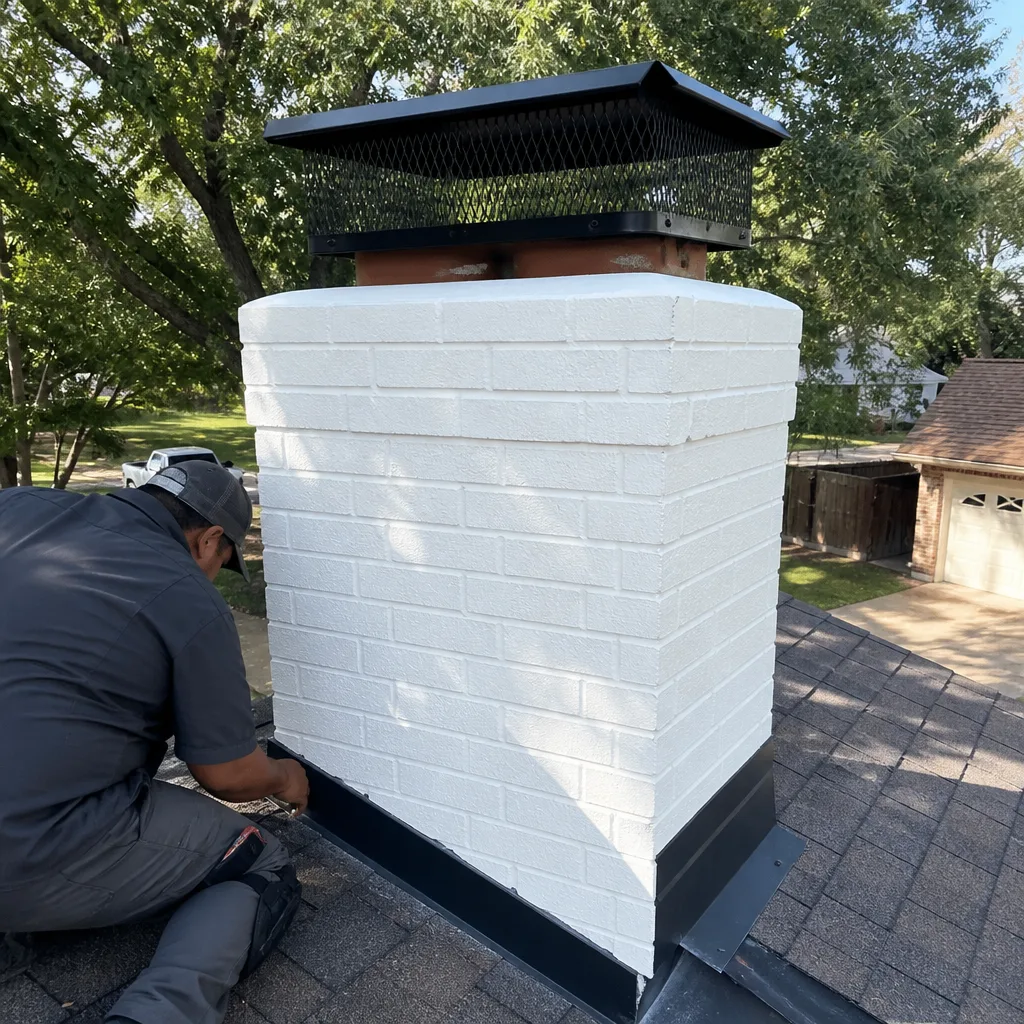
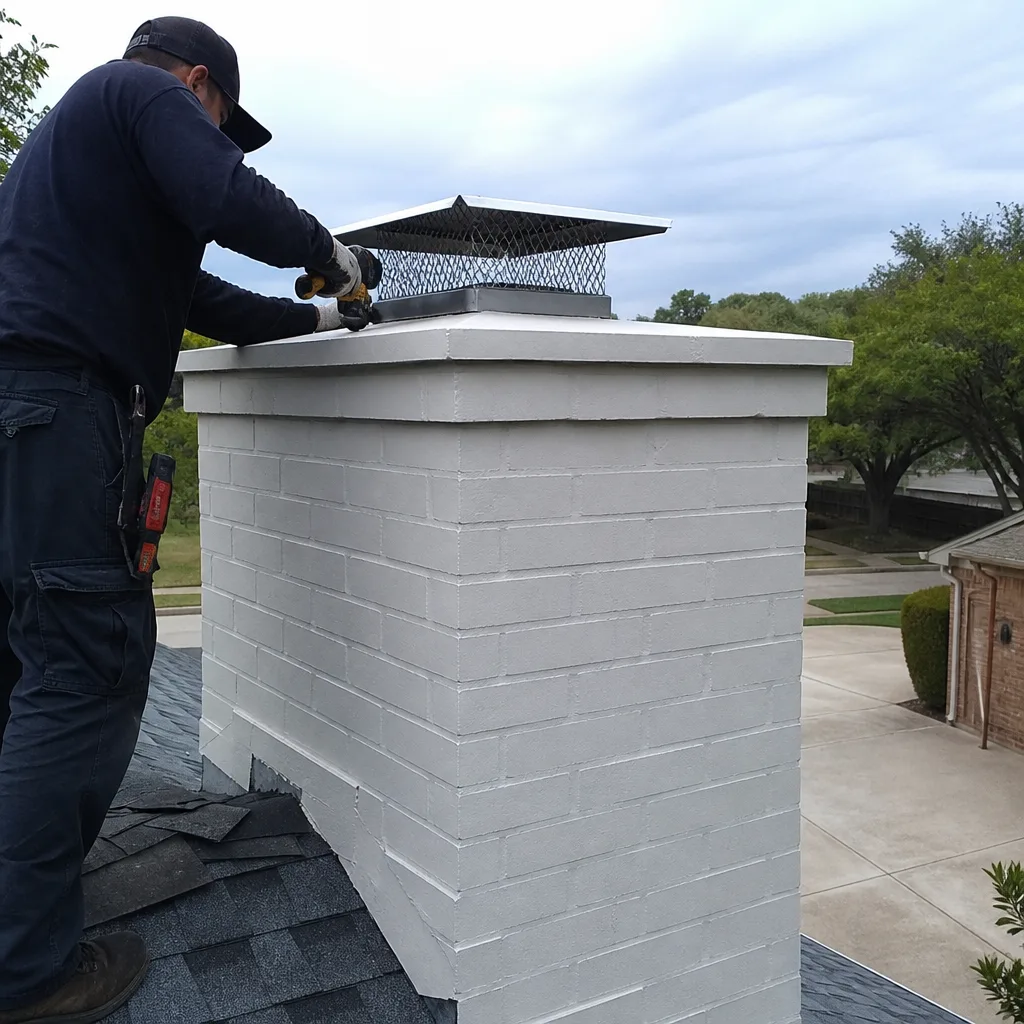
See the difference
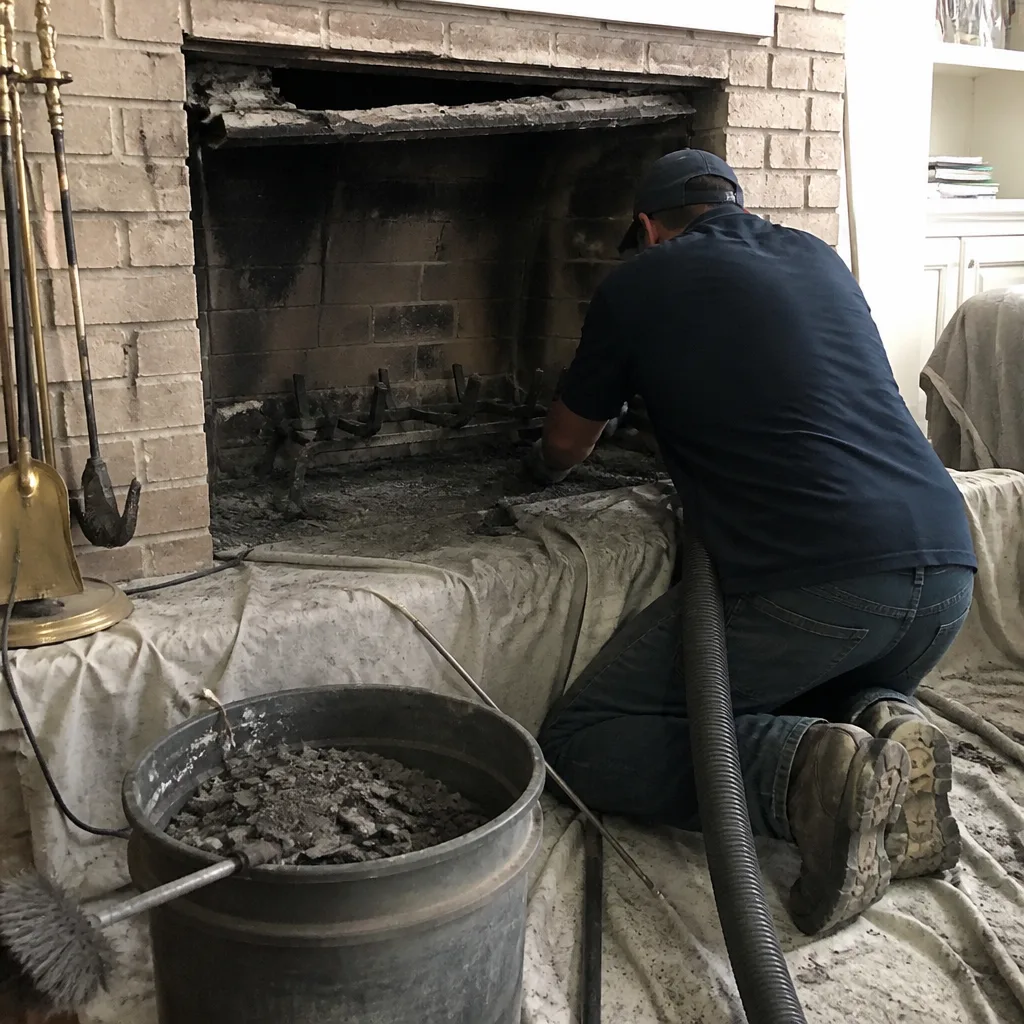 Before
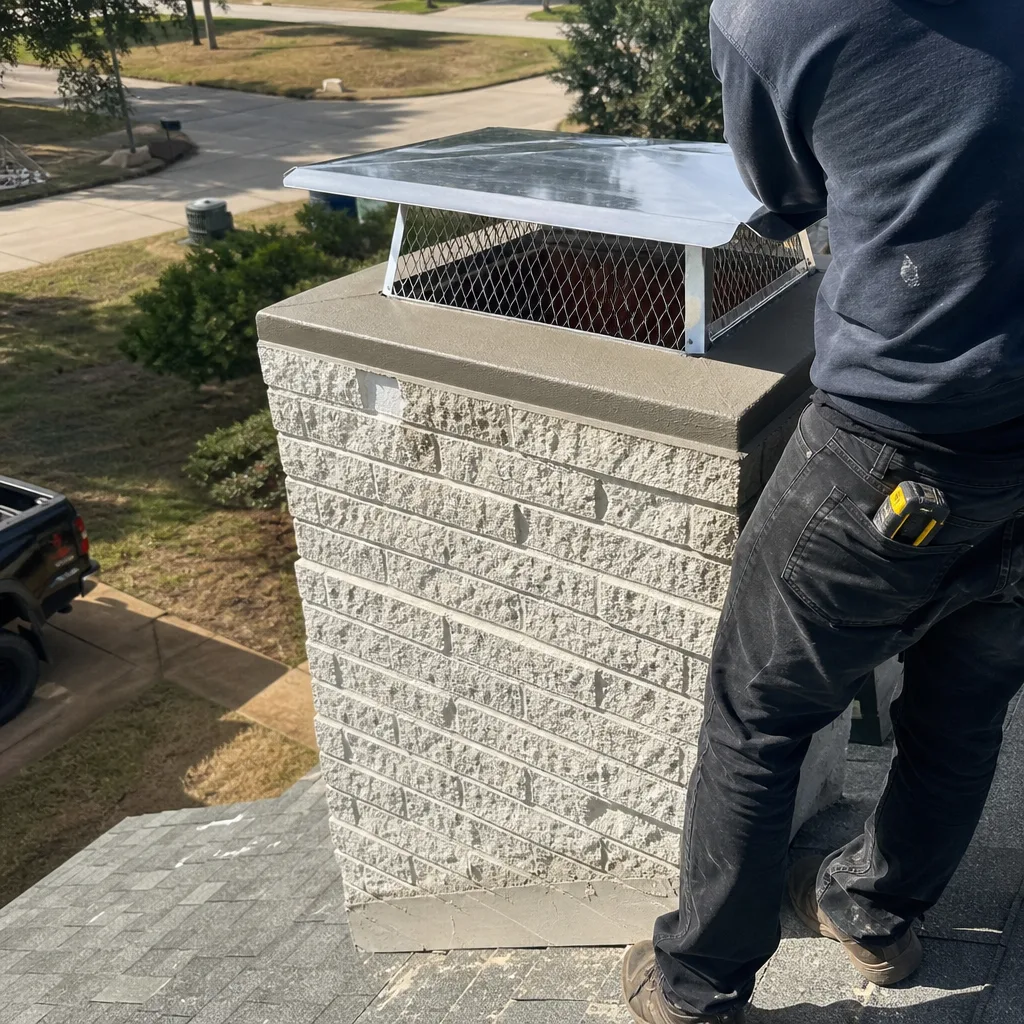 After
After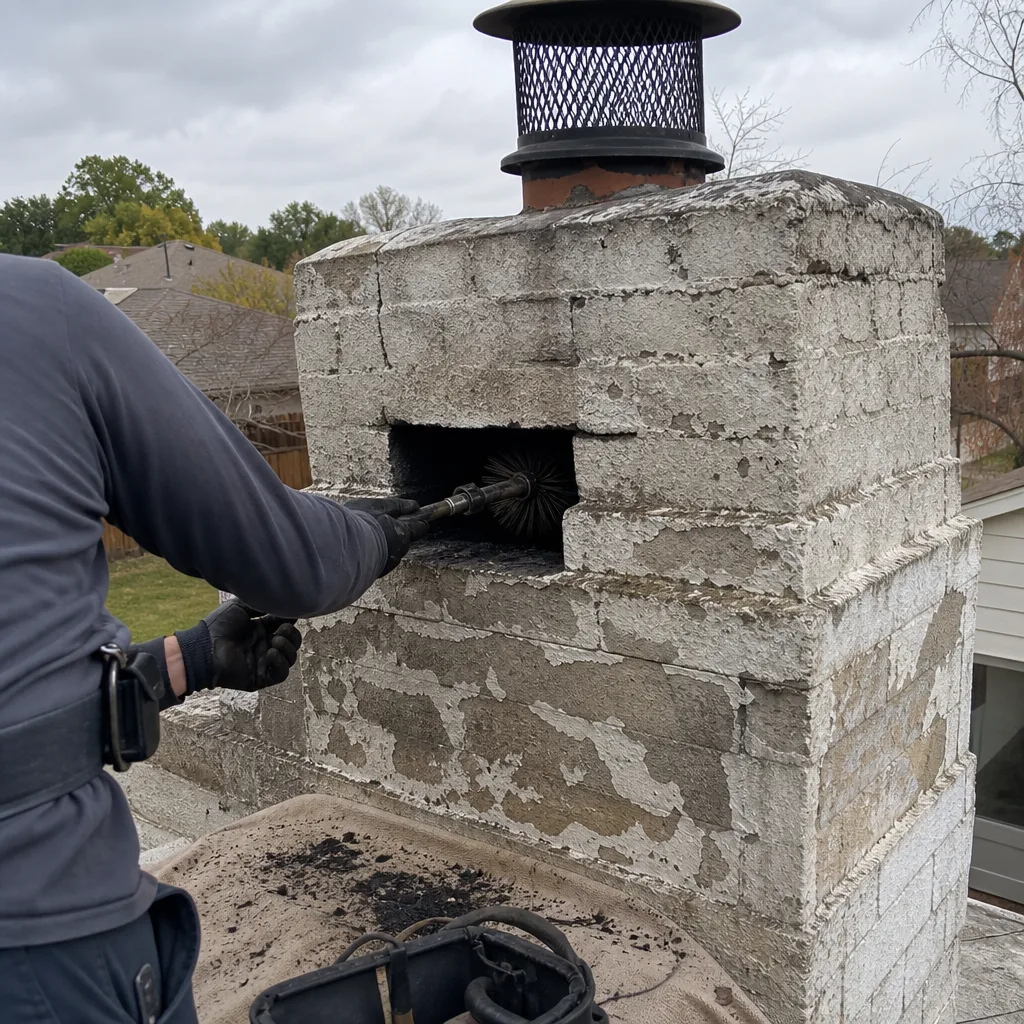 Before
 After
After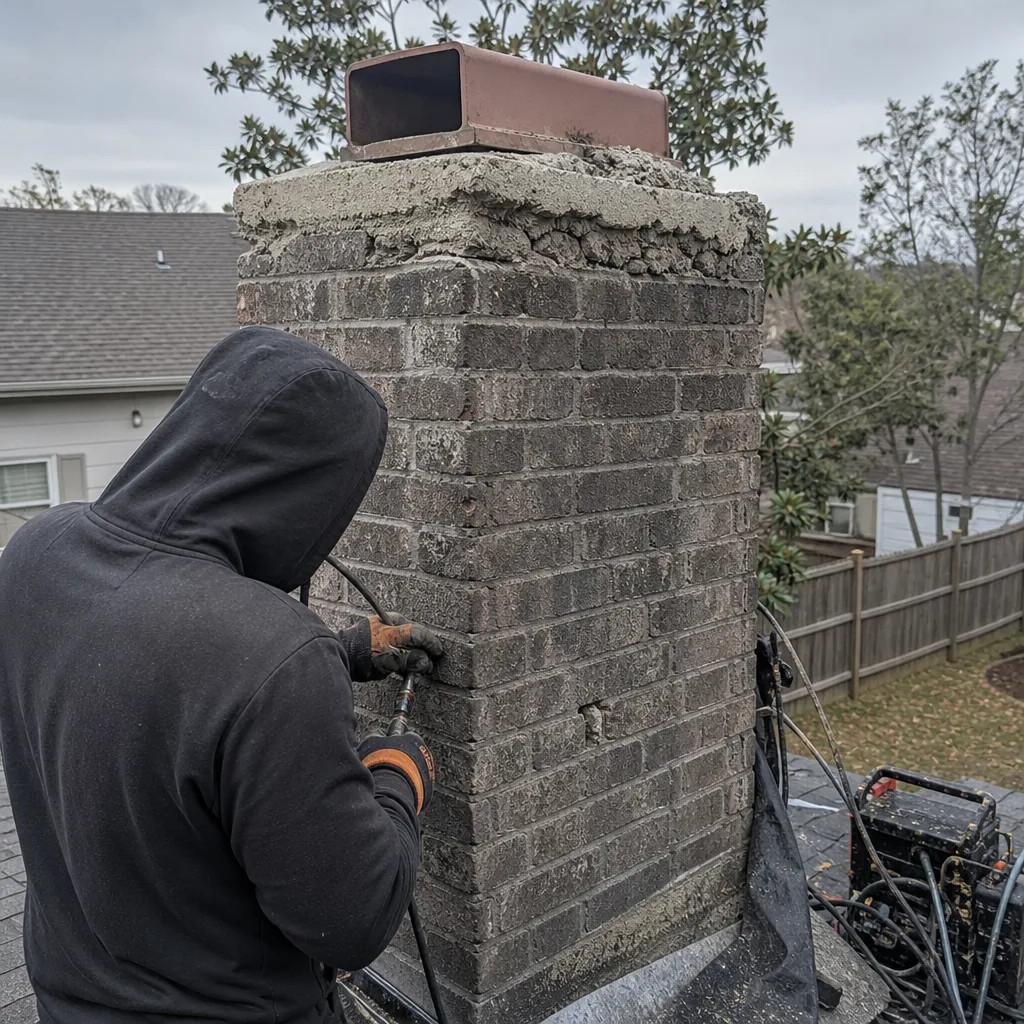 Before
 After
AfterFrequently Asked Questions
A standard chimney sweep in Dallas typically costs between $149 and $279. The range depends on the height of the roof, the condition of the flue, whether the chimney has a standard clay liner or a stainless liner, and whether there’s glazed creosote that requires chemical treatment. At Flint Chimney Co Dallas, we put the exact price in writing before any work starts, so the number on your approval is the number on the invoice. Call (361) 492-4099 for an exact quote.
A chimney used regularly during burn season should be swept once per year, ideally in late summer before the first fall fire. If you burn more than one cord of wood per season, or if you burn soft woods like pine and cedar, you may need a mid-season check. A chimney that never gets used still needs an annual inspection because water damage and animal intrusion happen whether or not you light fires.
Creosote builds up in the flue and smoke chamber over time. When the layer gets thick enough, a hot fire can ignite it. Chimney fires burn at temperatures that crack flue liners, warp dampers, and damage the masonry. Even if a chimney fire doesn’t burn the house down, it usually causes $2,000 to $8,000 in hidden damage to the flue and smoke chamber. A $200 sweep is cheaper than the repair that follows a chimney fire.
A cracked or deteriorated flue liner is a real problem, but you should never take that claim on faith. A proper chimney inspection in Dallas uses a camera system that documents the condition of the flue, and you should be able to see the damage for yourself on the screen. If a company tells you the liner is shot but won’t show you pictures, get a second opinion. Flint Chimney Co Dallas puts the findings in writing with photographic documentation.
You can remove loose, flaky creosote from the firebox and the first few feet of the flue with a chimney brush. You cannot safely clean the upper flue or the smoke chamber from the ground, and you cannot thoroughly remove stage three glazed creosote with a brush. The high-risk work is the roof access and the interior flue, and it’s worth having a trained professional handle those. The cost is in the sweep, not in the peace of mind, and the liability sits with the company, not with you.
Yes. Never trust a chimney you haven’t personally inspected. Previous owners leave all kinds of things behind: uncapped flues from missing caps, patched flashing with silicone, dampers that were warped for years before anyone noticed. A camera inspection before you light your first fire costs a couple hundred dollars and tells you exactly what you bought. It’s the cheapest insurance available for a chimney you know nothing about.
The Bottom Line
A chimney maintenance checklist works when every item gives you a pass/fail standard you can actually evaluate. Check the cap for rust-through and missing mesh. Check the crown for cracks wider than one-sixteenth of an inch. Check the flashing for lifted edges and caulk patches. Check the mortar for recession deeper than six millimeters. Test the damper with a dollar bill. Log every burn season so you have baseline data when you call for a sweep or a repair. If any item fails and you’re not sure what it means, call a professional who will put the findings and the price in writing, or explore our more guides & resources for additional help. That’s how a Dallas homeowner keeps a chimney safe without spending money on problems that don’t exist.
Written by Hank Delano, Owner at Flint Chimney Co Dallas, serving Dallas since 2002.